
What is Base Gede?
The Mother Sauce of Bali Explained
It is the “Complete Spice Paste.” It is the root, the soul, and the foundation of our culinary identity. If you can master this one paste, you have unlocked the secret to 80% of Balinese cuisine.
A Tale of Two Kitchens: Why Base Gede is the Soul of Bali
The Only Sauce You’ll Ever Need
French high cuisine is famously built upon the “Five Mother Sauces.” But in the traditional kitchens of Bali—from the royal palaces of Ubud to the humble family banjars here in Taro—we rely on just one: Base Gede (also known as Base Genep).
The name literally translates to the “Complete Spice Paste.” It is more than just a seasoning; it is the root, the soul, and the mathematical foundation of our culinary identity.
In Bali, we say that if you can master this one single paste, you have unlocked the secret to 80% of Balinese cuisine. From the richest duck curries to the freshest village salads, it all begins here.
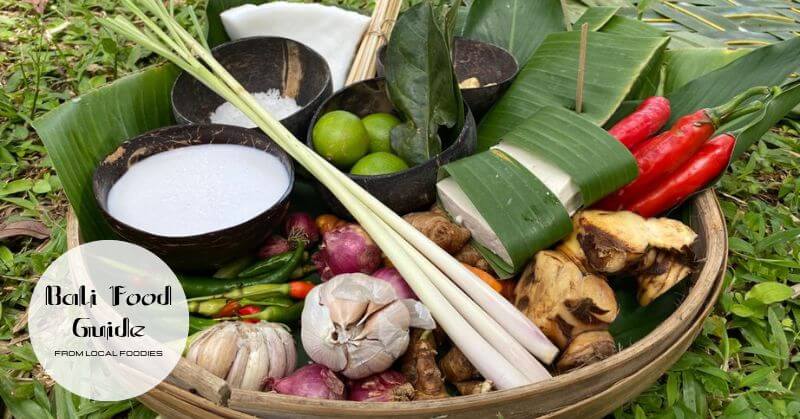
The Anatomy: The “Magic 8” Ingredients
In Balinese philosophy, flavor must reflect the harmony of the universe. A true, authentic Base Gede requires a perfect balance of Bebungkilan (aromatic roots and rhizomes).
We don’t use measuring cups or digital scales. Instead, we follow the Dharma Caruban—our ancient culinary scriptures—which teaches us to use the “Finger Ratio.” This ensures that the spices are balanced according to the unique size of the chef’s own hand, creating a deeply personal connection to the food.
The Finger Ratio (Takaran Jari):
- Galangal (Isen): The robust “Middle” of the flavor. Measure a piece the length of your Middle Finger.
- Ginger (Jahe): For warmth and zest. Measure the length of your Index Finger.
- Turmeric (Kunyit): For color and earthiness. Measure the length of your Ring Finger.
- Lesser Galangal (Kencur): The potent, perfumed “Little” secret. Measure only the length of your Little Finger.
The Supporting Cast:
- Shallots (Bawang Merah) & Garlic (Bawang Putih): Known as the “Mother and Father” of the paste. They represent the union of Earth and Sky (Rwa Bhineda).
- Candlenut (Kemiri): The secret to a creamy, rich texture without using dairy.
- Bird’s Eye Chili (Tabia Bali): The “fire” that activates the other spices and brings the heart of the dish to life.
- Shrimp Paste (Terasi): The deep, salty umami of the sea that grounds the aromatic roots.
You can see photos of these ingredients—freshly pulled from the volcanic soil of our farm—in our Full Balinese Spice Glossary).
The Process: Why Your Blender is Ruining Your Bumbu
If you throw these fresh ingredients into a modern high-speed blender, you aren’t making an authentic Balinese bumbu; you are making a “spice smoothie.” To the untrained eye, they look similar. To a Balinese palate, they are worlds apart.
The Science of the Stone
In the traditional kitchens of Taro, we use the Cobek (a heavy stone mortar) and the Ulekan (pestle). Unlike a blender’s metal blades which simply slice through the fibers, the stone crushes the cells of the plants.
- The Emulsion: Crushing forces the essential oils out of the Galangal and Turmeric, allowing them to emulsify and bond with the fats of the candlenut.
- The Oxidation Problem: High-speed blades heat the ingredients and introduce too much air, causing the delicate flavors to oxidize and turn bitter. A stone mortar keeps the paste cool, vibrant, and deep.
The Texture of Tradition
Authentic Base Gede should never be a watery liquid. It should be a thick, oily, and slightly coarse paste that we often call “Wet Gold.” Depending on the dish, we use two distinct Balinese techniques:
- Base Rajang (The Chopped Method): Using a Blakas (traditional heavy cleaver), we meticulously hand-chop the roots on a wooden block. This is a communal activity often seen in the Banjar (village hall). This rustic texture is prized for its “mouthfeel” in dishes like Lawar.
- Base Ulek (The Pounded Method): We pound the ingredients until the fibers disappear into a rich, integrated paste. This is the secret to a silky, aromatic curry.
The Versatility: One Paste, Infinite Dishes
Once your Base Gede is sautéed in Lengis Tandusan (our traditionally made hot-process coconut oil), it releases an aroma that signals a celebration is beginning. It then becomes the “Mother” to a family of our most famous dishes:
- Be Siap Mesanten (Balinese Chicken Curry): We thin the paste with fresh coconut milk to create a rich, golden broth that carries the heat of the chili and the earthiness of the turmeric.
- Lawar: The paste is the soul of this ceremonial salad, binding together minced meat, long beans, and grated coconut.
- Pepes Ikan (Fish in Banana Leaf): We rub the raw paste over fresh fish, wrap it in a banana leaf “origami” parcel, and steam it until the fragrance of the leaf infuses the spice.
The Philosophy: Sad Rasa (The 6 Flavors)
At Taman Dukuh, we teach our guests that Base Gede is more than just a recipe—it is an exercise in spiritual balance.
Our ancestors designed this paste to satisfy the Sad Rasa, the six fundamental tastes defined in the ancient Kekawin Ramayana:
- Sweet (Manis): From the Shallots and Palm Sugar.
- Sour (Asam): From the Lime or Tamarind.
- Salty (Asin): From the Sea Salt and Shrimp Paste.
- Bitter (Pahit): From the Turmeric.
- Pungent (Pedas): From the Ginger and Bird’s Eye Chili.
- Astringent (Sepat): From the Galangal.
When these six are in perfect harmony, the food ceases to be just a meal—it becomes Usada (medicine) for the body and the soul.
Experience the Power of the Stone
Don’t settle for “jarred” industrial spices or bitter blender pastes. The true secret of Balinese cooking cannot be found in a supermarket; it must be felt in the hands.
Join us for a Morning Cooking Class at Taman Dukuh. You will walk into our organic garden to harvest these roots yourself, learn the “Finger Ratio” passed down through generations, and feel the ancient power of the stone mortar as you create your own “Wet Gold.”
Stop guessing the flavor. Come experience the tradition.