Ubud is an easy place to love if you eat vegetarian. You are surrounded by yoga studios, organic cafés, lush rice fields, and traditional markets full of fresh herbs, greens, tofu, tempeh, coconut, peanuts, and young jackfruit.
Better still, Balinese cooking already leans on rich spice pastes, fresh vegetables, coconut, and texture, so meat-free food here feels full and satisfying, not like a backup plan.
A quick note before you choose: This guide is written from the perspective of the family behind Taman Dukuh Bali Farm Cooking School. Our local instructors, led by Chef Nyoman Deren, teach home-style Balinese cooking with a strong focus on organic, plant-based ingredients. While we would love to host you on our farm, you deserve a fair comparison. This is our honest guide to the best vegetarian cooking classes in and around Ubud.
Why book a vegetarian cooking class in Ubud?
Ubud is one of the best places in Bali to learn vegetarian cooking because the ingredients and the culture both support it.
This part of Bali is known for wellness travel, local farms, traditional markets, and a strong plant-based dining scene. That gives you easy access to the things that matter most in meat-free cooking: fresh turmeric, galangal, chilies, lime leaves, coconut, peanuts, mushrooms, tofu, tempeh, and just-picked vegetables.
Balinese cooking also suits vegetarian travelers better than many people expect. Great flavor here does not depend only on meat. It comes from freshness, texture, and the careful balance of spices. Many dishes already work beautifully without meat when the class is designed properly. That is why Ubud is such a smart place to learn, especially if you want more than a standard menu with a few tofu swaps.
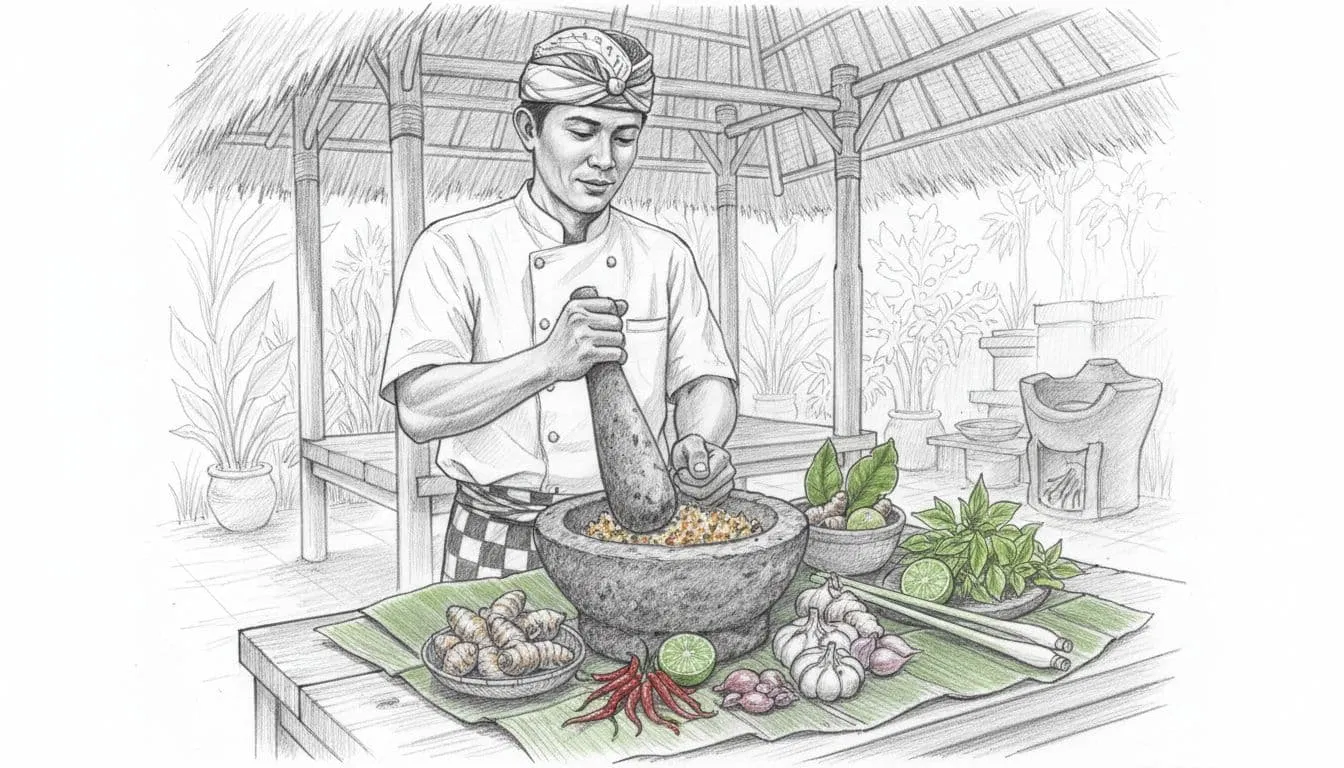
If you want to understand that flavor backbone before you book, this guide to Base Gede explains the traditional spice paste behind many classic Balinese dishes.
What to expect from a vegetarian cooking class in Ubud
Most vegetarian cooking classes in Ubud follow a similar rhythm, even if the setting changes.
You can usually expect:
- 3 to 5 hours of cooking time
- a market visit or farm walk in some classes
- 4 to 9 dishes, depending on the format
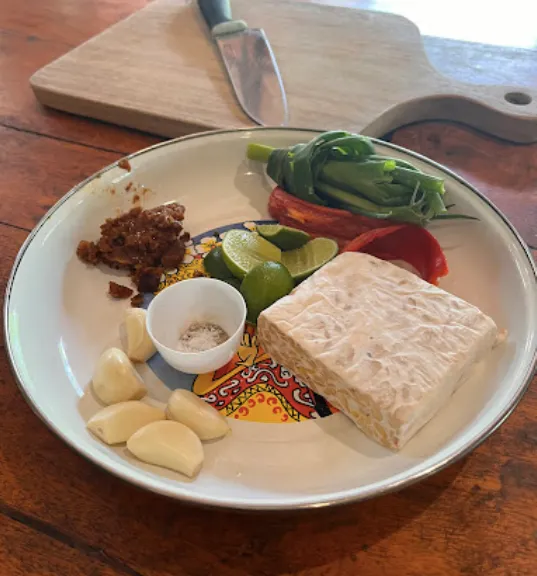
- hands-on work with spice pastes, herbs, tofu, tempeh, and vegetables
- a shared or private cooking station
- a meal at the end
- a recipe handout or PDF
- pickup from central Ubud in some cases
The biggest thing to check is whether the class offers a dedicated vegetarian menu or simply adapts a standard one. Some travelers are happy in mixed groups where meat eaters and vegetarians cook side by side. Others want a class designed around vegetarian cooking from the start.
What you may cook in a vegetarian class
A good vegetarian class in Bali should feel abundant, not limited.
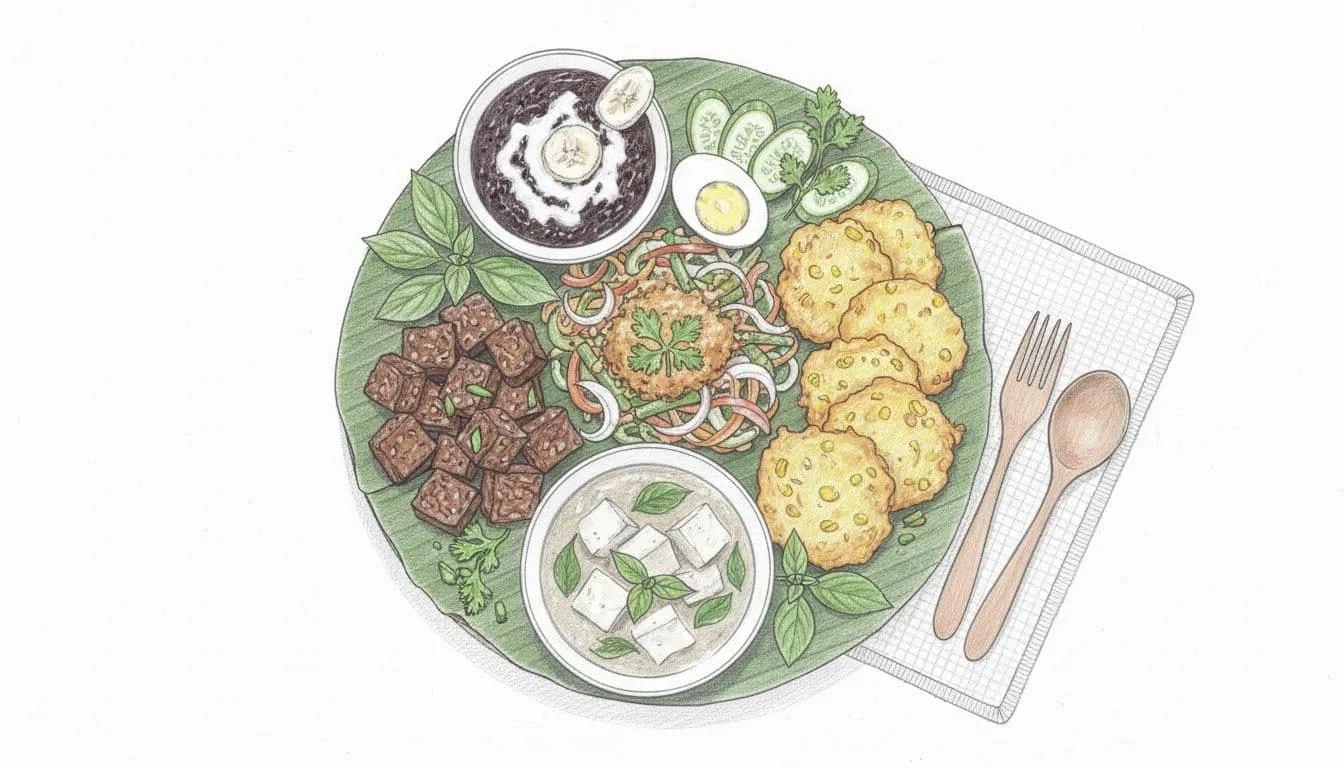
In a typical Ubud vegetarian class, you may cook dishes like gado-gado, tempeh asam manis, corn fritters, sayur urab, tofu curry, vegetable soup, peanut sauce, tum bambu, and black rice pudding.
That range is important because it shows the difference between a real vegetarian cooking experience and a class that simply removes meat from a standard menu.
Our picks for the 5 best vegetarian cooking classes in Ubud
We ranked these classes based on four things that matter most to vegetarian travelers: whether the menu is truly meat-free or just adapted, how fresh the produce is, the cooking setting, and the overall value.
| Rank | Cooking class | Best for | Location style | Typical price |
|---|---|---|---|---|
| 1 | Taman Dukuh Bali Farm Cooking School | Organic farm-to-table vegetarian cooking | Organic farm near Ubud | ~$29 to $31 |
| 2 | Pemulan Bali Farm Cooking School | Alternative farm day option | Rural organic garden | ~$36 to $38 |
| 3 | Subak Cooking Class | Market visit on a budget | Traditional house setting | ~$26 to $39 |
| 4 | Casa Luna Cooking School | Central Ubud convenience | Town-based school | Mid-budget |
| 5 | Paon Bali Cooking Class | Social group atmosphere | Home-style class | Mid-budget |
Ready to harvest your own organic ingredients?
1. Taman Dukuh Bali Farm Cooking School (Best overall for organic farm-to-table vegetarian cooking)
Best if you want a dedicated vegetarian menu built around farm freshness.
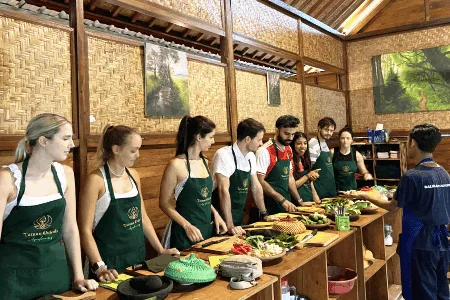
Taman Dukuh stands out because the vegetarian experience feels intentional, not patched together. You cook on our working organic farm in Taro village. The class begins with harvesting fresh herbs and vegetables from the soil before moving into an open-air traditional kitchen, or paon.
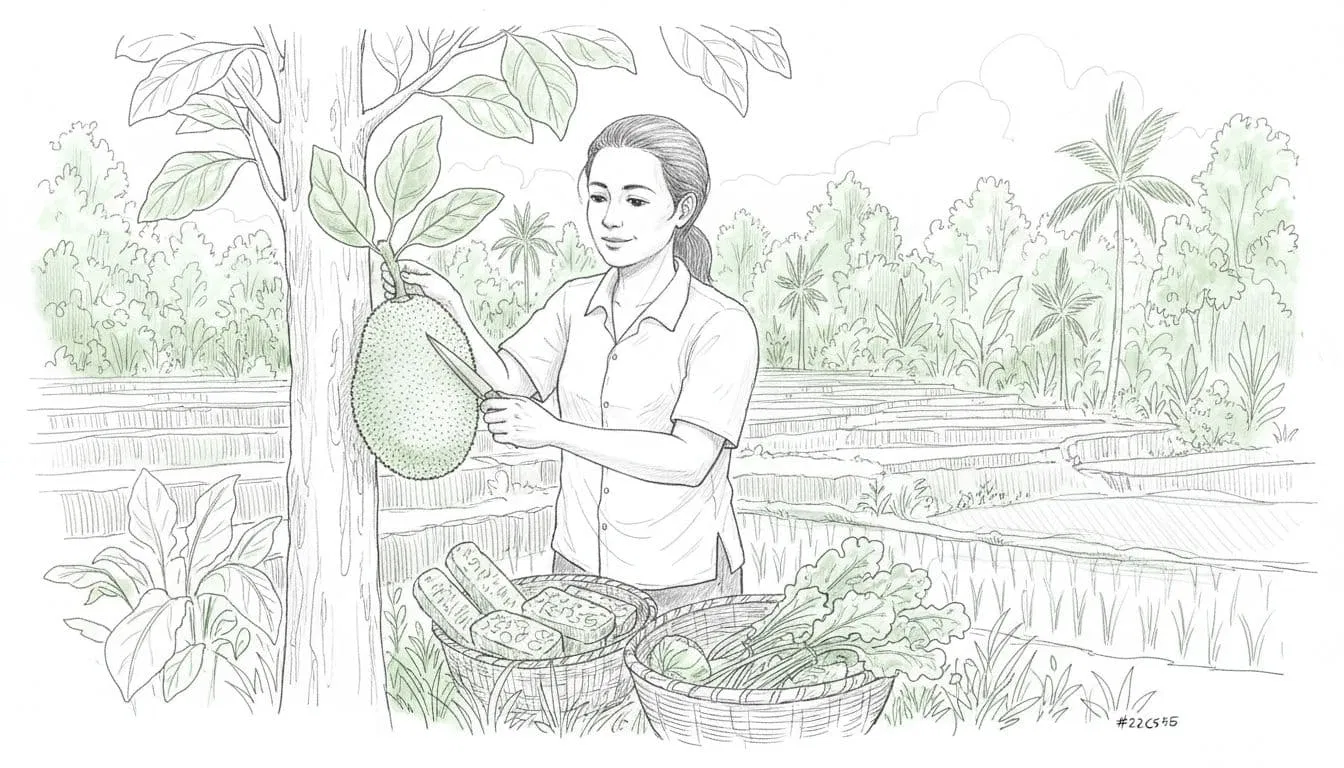
Our local instructors explain the logic behind the spices, not just the recipe steps. You will learn to make a meat-free base gede, authentic gado-gado with peanut sauce, sweet and sour tempeh, savory corn fritters, vegetable dishes, and traditional desserts. Instead of removing meat from a standard recipe and hoping it still works, our class teaches you how to build rich vegetarian flavor from the beginning.
Freshness matters more in vegetarian cooking because the vegetables and herbs are the stars. When turmeric, basil, long beans, and chilies are picked fresh, the whole meal comes alive.
What makes it stand out:
- A dedicated vegetarian menu, not a modified meat menu
- You harvest organic, pesticide-free vegetables yourself
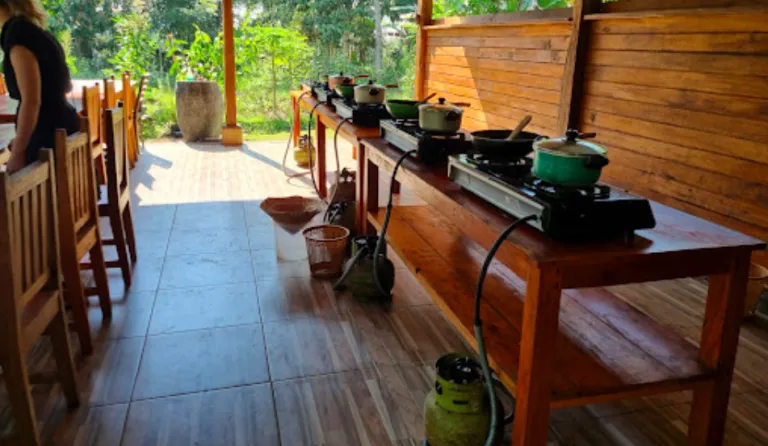
- Taught by local Balinese chefs in a traditional open-air kitchen
- Strong focus on home-style spice knowledge and farm-to-table cooking
Ready to join us?
2. Pemulan Bali Farm Cooking School (Best alternative farm day)
Best if you want a longer countryside experience outside central Ubud.
Pemulan is a strong option for travelers who want a rural, hands-on farm setting and do not mind going farther from town. It is often described as being around 45 minutes outside Ubud, which gives it a quieter atmosphere and more of a countryside feel.
Its vegetarian lineup is one of its biggest strengths. Reported menus often include dishes such as tofu preparations, corn fritters, tempe dishes, and black rice pudding, which suggests real care for plant-based cooking rather than a few last-minute substitutions.
If you want a fuller farm-style day, Pemulan is a solid choice. Taman Dukuh still feels more intimate as a family-run farm school with a tighter local teaching identity, but Pemulan remains one of the better alternatives for travelers who want a longer organic cooking experience.
3. Subak Cooking Class (Best for a market visit and budget value)
Best if you want a market visit on a tighter budget.
Subak suits travelers who want a traditional market tour, a local house setting, and good value. The class typically lasts about 4 to 5 hours, and reported menus include multiple Balinese dishes using tofu, tempeh, fresh vegetables, and local spices.
Typical online pricing often falls in the $26 to $39 range, depending on the platform and date. That makes it one of the more budget-friendly options for travelers who still want a proper cooking class experience.
Subak appears very vegetarian-friendly, but it often runs mixed groups where meat eaters and vegetarians cook side by side with substitutions. That works well for many travelers, but it is still different from a class built entirely around a vegetarian menu.
4. Casa Luna Cooking School (Best for central Ubud convenience)
Best if you want to stay close to central Ubud.
Casa Luna is a practical choice if you want a well-known cooking school without leaving town. Its biggest strengths are convenience and a long-standing reputation in central Ubud.
Because detailed current menu facts are limited, vegetarian travelers should confirm in advance whether the menu is dedicated or adapted. If staying central matters most, Casa Luna may still be a useful option. If farm freshness, produce sourcing, and a more immersive setting matter more, the farm-based classes usually offer more depth.
5. Paon Bali Cooking Class (Best for a social group experience)
Best if you want a lively mixed-group class.
Paon Bali is a good fit if you want a classic Ubud cooking class atmosphere with shared prep and group interaction. It appeals to travelers who enjoy a friendly pace and the social side of cooking with others.
Vegetarian travelers should note that this appears to be more of a mixed-group class. It may accommodate non-meat eaters with tofu and tempeh substitutions, but it is still worth confirming the menu style before booking. For travelers who want a social experience first and a strict vegetarian format second, it may be a good match.
How much does a vegetarian cooking class in Ubud usually cost?
Vegetarian cooking classes in Ubud usually fall into a budget to mid-range price band.
Lower-priced classes often focus on a market visit, a home-style setting, or a mixed-group format. Farm-based or more immersive classes can cost a little more because they may include:
- transport or pickup
- farm or garden access
- smaller group sizes
- more dishes
- longer sessions
- a more dedicated vegetarian menu
Vegetarian classes are not always cheaper than mixed-menu classes. In most cases, you are paying for the full experience, not just the ingredient cost. The real value comes from the teaching, the produce quality, the setting, and how much you actually learn.
What makes a great vegetarian cooking class in Bali?
A strong class respects both your diet and your taste buds. You are not paying just to chop vegetables. You are paying to learn why Balinese food works.
A dedicated menu vs. a modified menu
The difference is simple. A weak vegetarian class just subtracts meat from a chicken curry and leaves the dish tasting flat. A strong, dedicated vegetarian class shows you how to build flavor with tempeh, mushrooms, coconut, peanut sauces, herbs, and spice paste from the start.
Vegetarian and vegan are not always the same, either. If stricter dietary needs matter to you, ask whether the class uses eggs, shrimp paste, or broth anywhere in the menu. This guide to dietary accommodations in Balinese cuisine may help if you want more detail.
Fresh organic produce makes all the difference
In vegetarian cooking, fresh produce is not just a side note. It carries the meal. Crisp long beans, freshly grated coconut, fragrant herbs, and just-picked chilies make a visible difference on the plate.
That is why farm-to-table cooking classes often leave a stronger impression. You do not just taste the difference, you understand where it begins.
Quick checklist before you book
Before you pay, ask these questions:
- Is the menu dedicated vegetarian or adapted?
- Is shrimp paste or broth used anywhere?
- Can vegan needs be handled too?
- Is the produce farm-fresh or store-bought?
- How many dishes will you cook?
- Is pickup included?
- Will you get recipes to take home?
- Is the class small group, mixed group, or private?
Common questions vegetarian travelers ask before they book
Final verdict
Ubud is a vegetarian paradise, and taking a cooking class is one of the best ways to bring those fresh, vibrant Balinese flavors back home. The best classes do more than swap out meat. They show you how to build flavor properly.
For the best overall fit, Taman Dukuh stands out for its organic farm setting, local teaching team, and vegetarian menu that feels truly dedicated rather than improvised.
Ready to master meat-free Balinese cooking?