
The Living Glossary:
Authentic Balinese Spices from Our Farm in Taro
Balinese food is not just about ‘heat’; it is about the complex marriage of roots, rhizomes, and leaves. This guide introduces you to the ‘Magic 8’—the core ingredients that make up Base Gede (The Mother Sauce).
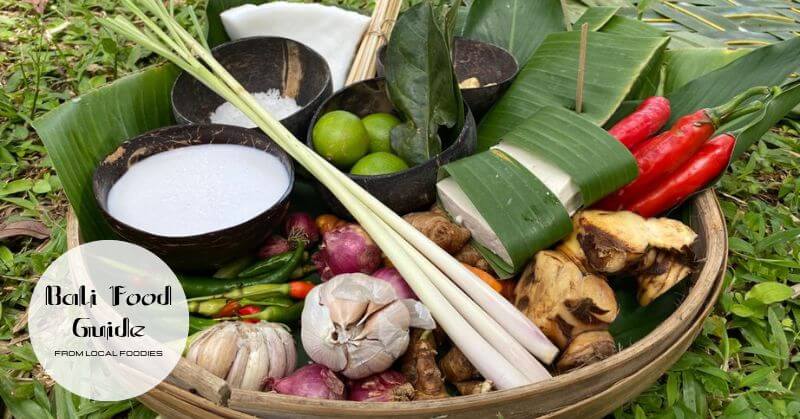
Flavor does not start in the kitchen. It starts in the soil.
If you have eaten Balinese food and wondered why you cannot replicate the taste at home, the answer is likely not in your technique, but in your ingredients. In the West, spices are often dried powders sitting in jars for months, losing their soul. In Bali, specifically here in the ancient village of Taro, our spices are “living.”
At Taman Dukuh, we do not open jars. We pull rhizomes (roots) from the volcanic earth just minutes before we crush them. This preserves the essential oils—the moisture, the aroma, and the medicine—that define the true taste of the island.
Whether you’re a curious traveler, an aspiring home cook wanting to learn how to cook Balinese food, or a seasoned chef, prepare to discover the secrets behind Bali’s magical flavors. This is your ultimate guide to Bali spices and ingredients.
The Foundation of Bumbu Bali (Base Genep)
Two core groups of ingredients form the very foundation of countless Balinese spice pastes (bumbu) and traditional Balinese dishes, each bringing its unique personality and “bursting with flavor” to our kitchen. These are the Balinese spices essentials.
A. Bebungkilan (The Aromatic Roots)
The Foundation of Flavor
These earthy, pungent roots provide the backbone of Base Genep (The Complete Spice Paste). Historically cultivated in Bali since the 9th century, these “Guru” ingredients are used for both food seasoning and Usada (Traditional Medicine).
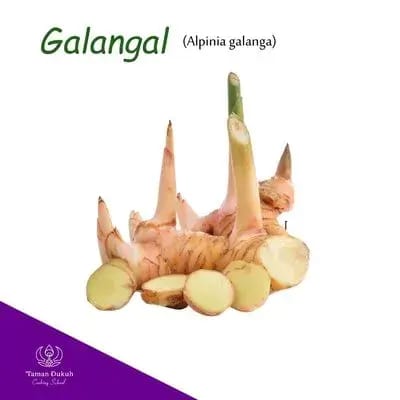
1. Galangal (Isen / Lengkuas )
- Scientific Name: Alpinia galanga
- The Look: Often confused with ginger, but the skin is paler (pinkish-white) and the texture is completely different. It is hard like wood.
- Flavor Profile: It is not “hot” like ginger. It Sharper, more citrusy, and peppery than ginger, with a slightly piney, earthy aroma. An absolute must in many Balinese spice pastes! As the robust soul of many dishes, its assertive flavor cuts through richness and adds an unmistakable Balinese signature.
- Balinese Use: Do not try to eat it whole. We use thick slices of Galangal in soups to infuse flavor (which you remove before eating).
- Farm Note: If you try to break a fresh Galangal root with your hands, it will snap with a sharp “crack” sound. Ginger will just bend.
- Best Substitute: None. Dried Galangal slices are acceptable in soups, but nothing replaces the fresh root for pastes.
In some traditions, isen (galangal) embodies the astringent (sepat) taste and is linked to the Pandawa hero Bima. We’re so proud to grow it abundantly on our farm.
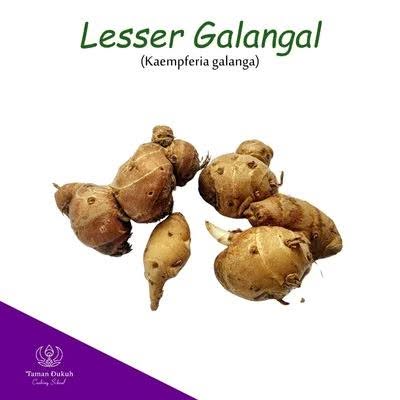
2. Lesser Galangal (Cakuh / Kencur )
- Scientific Name: Kaempferia galanga
- The Look: The smallest of the roots. They look like tiny clusters of brown fingers or peanuts. The inside is white.
- Flavor Profile: Truly unique and highly aromatic, with a distinct earthy, peppery, and slightly camphoraceous taste. Kencur is one of Bali’s “secret weapons” for flavor! Its distinctive aroma is key to specific dishes and sambals. This is the distinct flavor that separates Balinese food from Thai or Vietnamese food.
- Balinese Use: It is the star ingredient in Basa Suna Cekuh (a simple paste of Garlic and Kencur). We also mix it with Beras (soaked rice) to create a traditional Boreh, a warming body scrub used by farmers to relieve muscle pain.
- Farm Note: This plant grows low to the ground, hiding under broad, round green leaves. We often have to dig carefully to find the treasures.
- Best Substitute: There is no real substitute. In a pinch, Cardamom mixed with White Pepper gets close to the aroma.
It is mythologically linked to the salty (asin) taste and Sang Sahadewa.
3. Ginger (Jahe)
- Scientific Name: Zingiber officinale
- The Look: Pale yellow interior with smooth, light brown skin. The skin is thin enough to be scraped off with a spoon.
- Flavor Profile: Pungent, spicy-sweet, and warming. Its aroma is fresh and zesty. Ginger in Bali adds warmth and a clean, spicy kick. It’s wonderfully versatile.
- Balinese Use: We use ginger to neutralize strong odors, particularly in Bebek Betutu (Smoked Duck) and seafood dishes.
- Farm Note: We use our fresh ginger to add a warming “kick” to our signature Avocado Leaves Tea, which we serve to welcome guests upon arrival.
- Best Substitute: Young Ginger found in Asian markets.
It represents the pungent/spicy (pedas) taste and is associated with Sang Nakula.
4. Turmeric (Kunir / Kunyit )
- Scientific Name: Curcuma longa
- The Look: A bright orange flesh hidden inside a brown, ringed skin. It looks similar to ginger but is smaller and more vibrant.
- Flavor Profile: Earthy, slightly bitter, peppery, and mustard-like. It provides the iconic “Golden” color of Bali.
- Balinese Use: Essential for Nasi Kuning (Ceremonial Yellow Rice) and Base Genep.
- Farm Note: Be careful when harvesting—the orange stain from fresh Taman Dukuh turmeric can stay on your hands for three days!
- Best Substitute: Turmeric Powder (1 tsp powder = 1 tbsp fresh), but you lose the aromatic oils.
Linked to the Pandawa Arjuna and the bitter (pahit) taste. Fresh turmeric root from our farm is worlds apart from dried powder!
5. Shallots (Bawang Merah )
- Scientific Name: Allium cepa var. aggregatum
- The Look: Unlike the large, purple European shallots, ours are small, intense, and reddish-purple. They grow in tight clusters.
- Flavor Profile: Sweeter and crunchier than regular onions, with less water content. Sweeter and milder than large onions. Indispensable, forming the sweet, aromatic base of almost every spice paste. Also fantastic fried crispy (
bawang goreng). - Balinese Use: They are the “body” of Base Gede. We usually use a 2:1 ratio of Shallots to Garlic. We also slice them thin and deep-fry them to make Bawang Goreng, the crispy garnish sprinkled on almost every savory dish in Bali.
- Kitchen Note: We source these from our local collaborators who grow them in the cooler highlands nearby, ensuring they are firm and free of moisture.
- Best Substitute: Spanish Red Onion (diced very small).
Linked with garlic to the sweet (manis) taste in Pandawa lore (Sang Dharma Wangsa).
6. Garlic (Bawang Putih )
- Scientific Name: Allium sativum
- The Look: We use a variety with smaller cloves than the giant imported garlic found in supermarkets. The skin is often tighter and harder to peel.
- Flavor Profile: Pungent and spicy when raw, but it turns sweet and nutty when roasted or fried.
- Balinese Use: While shallots provide the volume, garlic provides the “punch.” In our Morning Cooking Class, you will learn that garlic must be ground into a fine paste on the Cobek (stone mortar) to release its oils fully—chopping it is not enough.
- Kitchen Note: When selecting garlic in the market, we always look for bulbs that feel “heavy” for their size, indicating they haven’t dried out inside.
- Best Substitute: Standard Garlic (use slightly less as large cloves can be watery).
Bebungkilan (aromatic roots) like galangal, turmeric, ginger, and kencur – core Balinese spices bringing earthy depth and “amazing” flavor.B. Base Wangen (The Fragrant Seeds)
While roots provide the body, Wangen (meaning “Fragrant”) provides the soul. These toasted seeds add warmth and depth. In the village, we might add rare roots like Jangu (Sweet Flag) or Bangle (Bengal Ginger), but for our international guests, we have perfected a 7-Spice Blend that captures the authentic aroma using ingredients you can find back home.
The Taman Dukuh 7-Spice Wangen Blend
We toast these seeds dry to release their oils, then grind them into a fine powder. This “Magic Dust” is what makes our Bebek Betutu smell so festive.
- Black Peppercorn (Merica Hitam): For deep, lingering heat.
- White Peppercorn (Merica Putih): For sharp, immediate heat.
- Cloves (Cengkeh): The “warm” spice that numbs the tongue slightly.
- Nutmeg (Pala): Adds a sweet, woody depth (essential for rich meats).
- Coriander Seeds (Ketumbar): The citrusy, floral note that balances the heavy spices.
- Cumin (Jinten): Earthy and warm.
- Sesame Seeds (Wijen): Adds a nutty richness and essential oils.
*Usually, Coriander is the dominant seed, while Cloves and Cumin are used sparingly so they don’t overpower the dish.
The Essentials (Leaves, Heat & Umami)
The Top Notes
Beyond the core roots and seeds, a host of other Balinese ingredients are absolutely crucial for building those incredible layers of flavor and aroma that make authentic Balinese cuisine so “tasty and spectacular!”
Bird’s Eye Chili (Cabai rawit)
- Scientific Name: Capsicum frutescens
- The Look: Tiny, vicious, and standing upright on the branch. They ripen from green to orange to bright red.
- Flavor Profile: Sharp, immediate heat. Much hotter than the large red chilies (Lombok) which are mostly used for color.
- Balinese Use: The soul of Sambal Matah. We chop these tiny chilies and mix them with shrimp paste and hot oil.
- Clarification: Do not confuse this with Tabia Bun (Balinese Long Pepper / Cabai Jawa). Tabia Bun grows on a vine and looks like a small catkin; we use that for medicinal soups and specific spice mixes (Basa Wam).
- Farm Note: These grow wild all over Taman Dukuh. We pick them 5 minutes before the cooking class starts.
- Best Substitute: Thai Bird’s Eye Chili or Habanero (if you like extreme heat).
Candlenut (Kemiri)
- Scientific Name: Aleurites moluccanus
- The Look: A hard, rock-like shell containing a waxy, cream-colored nut. It looks similar to a Macadamia nut.
- Flavor Profile: Raw, it is slightly toxic and bitter. Cooked, it becomes nutty, oily, and creamy.
- Balinese Use: This is our natural thickener. We crush Kemiri into our spice pastes to give curries a rich, creamy texture without needing heavy coconut cream.
- Chef’s Tip: If you cannot find Kemiri in your country, Macadamia nuts are the best substitute.
- Best Substitute: Macadamia Nuts (Perfect match) or Cashew Nuts (Good match).
Lemongrass (Sereh):
- Scientific Name: Cymbopogon citratus
- The Look: Tall, stiff grass with a bulbous white base and sharp green blades.
- Flavor Profile: Lemony, floral, and grassy, but without the acidity of lemon juice.
- Balinese Use: We use it in two ways:
- The Stalk: We smash the white bulb and throw it into curries (like Opokan) to infuse flavor.
- The Skewer: For Sate Lilit, we wrap the meat around a lemongrass stick. As the meat grills, the oils from the stick steam the meat from the inside.
- Farm Note: It grows in giant clumps to hold the soil on our terraced slopes. Be careful when harvesting—the grass blades are sharp enough to cut your finger!
- Best Substitute: Lemon zest mixed with a little fresh ginger.
Kaffir Lime / Limo (Jeruk Limo)
- Scientific Name: Citrus amblycarpa (Nasnaran Mandarin) or Citrus hystrix (Fruit)
- The Look: Often confused. Jeruk Purut is the wrinkly, bumpy fruit (Kaffir Lime). Jeruk Limo is the smaller, smoother fruit (Key Lime cousin) with a distinct musk.
- Flavor Profile: Sour, but with a unique flowery/musky aroma that regular limes lack.
- Balinese Use: The “Finishing Touch.” We squeeze this over Sambal Matah or Sate right before serving. The heat of the chili and the acid of the Limo create a chemical reaction that makes your mouth water.
- Farm Note: We use the Jeruk Purut fruit mostly for shampoo and cleansing rituals, but we use the Jeruk Limo for eating.
- Best Substitute: Key Lime or Calamansi. Regular limes are too acidic and lack the fragrance.
Shrimp Paste (Terasi)
- Scientific Name: Fermented Acetes (Krill)
- The Look: A dark brown/black block that looks like chocolate (but smells like dirty feet).
- Flavor Profile: Raw: Pungent and fishy. Cooked: Pure Umami (Savory). It creates the “Meaty” depth in vegetable dishes.
- Balinese Use: It is the “Salt and Pepper” of Bali. We rarely make a Sambal without it.
- Important: You must cook Terasi. We roast it over an open flame or fry it until it crumbles. Eating it raw can upset your stomach.
- Best Substitute: Thai Shrimp Paste (Gapi) or Fish Sauce (if you need a liquid alternative).
Palm Sugar (Gula Merah or Gula Aren):
Deep, rich, caramel-like sweetness from coconut or arenga palms. Balances heat and tartness.
Indonesian Bay Leaf (Daun Salam)
- Scientific Name: Syzygium polyanthum
- The Look: A simple, thin green leaf. Dried, it turns brown and brittle.
- Flavor Profile: Warning: This is NOT the same as a Western Bay Leaf (Laurus nobilis). Western bay leaves are floral and piney. Daun Salam is earthy, savory, and slightly metallic.
- Balinese Use: We fry these leaves in the hot coconut oil before adding the spices. This releases a savory aroma that defines the smell of an Indonesian kitchen.
- Farm Note: We have large Salam trees shading our garden. We prefer to use the leaves fresh or slightly dried, but never old and gray.
- Best Substitute: There is no real substitute. If you can’t find it, omit it. Do not use Western Bay Leaf; it will change the flavor profile completely.
Coconut Oil (Lengis Tandusan)
- Scientific Name: Cocos nucifera (Oil)
- The Look: Unlike clear Western oil, traditional Balinese oil is slightly yellow and cloudy.
- Flavor Profile: Nutty, sweet, and rich. It smells like cooked dessert.
- Balinese Use: We do not use neutral vegetable oil. We use Tandusan. Because it is cooked over a fire (Hot Process), it retains the flavor of the coconut. When you fry Base Gede in this oil, the smell is intoxicating.
- Farm Note: We make this in our VCO Class by boiling coconut milk for hours until the oil separates from the protein curds (Galendo).
- Best Substitute: Virgin Coconut Oil (Cold Pressed) is okay, but lacks the “cooked” smokiness.
Hidden Gems (Rare Aromatics)
Discovering the Village Secrets
These are rare ingredients found in our organic garden that you likely won’t see in a standard supermarket.
Bangle (Bengal Ginger)
- Scientific Name: Zingiber cassumunar
- The Look: A rhizome similar to ginger but with a paler, greenish-yellow interior and extremely fibrous texture.
- Flavor Profile: Pungent, slightly bitter, and highly camphorous. It has a sharp, medicinal aroma that “cleanses” the palate.
- Balinese Use: Essential in Usadha (traditional medicine). In the kitchen, it is a key ingredient in Base Wangen for meat; its sharp scent is used specifically to cut the richness and fat of duck or pork.
- Farm Note: Bangle grows wild in the shaded, damp areas of our farm. It is rarely found in modern supermarkets, making it a true village treasure.
- Best Substitute: Fresh Ginger (use slightly more), though it will lack the medicinal “punch.”
Jangu (Sweet Flag)
- Scientific Name: Acorus calamus
- The Look: A knotty, creeping rhizome that grows in wet, marshy soil near our rice fields. It has long, sword-like leaves.
- Flavor Profile: A sweet, slightly spicy, and earthy fragrance. It smells remarkably like a mix of cinnamon and lemongrass.
- Balinese Use: Primarily used in Banten (offerings), but can be used to subtly flavor rice or “age” older spice pastes. It is considered a protective plant in Balinese culture.
- Farm Note: We harvest Jangu from the edges of our fish ponds at our farm.
- Best Substitute: None. Its fragrance is too unique to replicate.
Daun Simbukan (Skunk Vine)
- Scientific Name: Paederia foetida
- The Look: A climbing vine with thin, delicate-looking green leaves.
- Flavor Profile: Warning: When fresh, it has a strong sulfurous aroma (hence the name “Skunk Vine”). However, once cooked, it transforms into a deep, savory, umami flavor.
- Balinese Use: The star of Nasi Bubur Simbukan. It is highly prized for its ability to aid digestion and “cool” the stomach.
- Farm Note: You will see this vine trailing over our stone walls. We only pick the young leaves for the best flavor.
- Best Substitute: None. It is a “love it or hate it” ingredient that defines authentic village home cooking.
Daun Ginten (Indonesian Borage)
- Scientific Name: Plectranthus amboinicus
- The Look: Thick, fuzzy, succulent leaves that feel like velvet to the touch.
- Flavor Profile: A powerful oregano-thyme aroma with a distinct minty, pungent Balinese twist.
- Balinese Use: Used to brighten heavy soups and stews. It is also a key aromatic in Sambal Mbe (fried shallot sambal).
- Farm Note: We grow Daun Ginten near our kitchen for easy access; just rubbing the leaf releases enough aroma to fill a room.
- Best Substitute: Fresh Oregano or Mexican Oregano.
Kemenyan (Benzoin Resin)
- Scientific Name: Styrax benzoin
- The Look: A hard, aromatic tree resin that looks like small golden or brown pebbles.
- Flavor Profile: Warm, slightly sweet, and balsamic—similar to vanilla but more “sacred” and earthy.
- Balinese Use: Used very sparingly in complex meat blends like Base Wangen. It adds a “sacred” fragrance to brothy dishes. Caution: It must be used with great care; too much will make the food bitter.
- Farm Note: While native to Indonesia, we treat this as a precious “trade spice” kept in our special spice chest.
- Best Substitute: None.
Kapulaga (Balinese Cardamom)
- Scientific Name: Amomum compactum
- The Look: Round, off-white pods that are smaller and more “hairy” than the green Indian cardamom.
- Flavor Profile: Strong, aromatic, and slightly sweet with hints of mint and woodsmoke.
- Balinese Use: A core component of Base Wangen. It adds a layer of perfumed complexity to ceremonial foods and “royal” meat dishes.
- Farm Note: Our local Taro cardamom is harvested from the forest floor where it thrives in the cool, humid highland air.
- Best Substitute: Green Cardamom (use half the amount as it is very floral).
Bunga Lawang (Star Anise)
- Scientific Name: Illicium verum
- The Look: A beautiful, hard, eight-pointed star-shaped seed pod.
- Flavor Profile: Deeply warm and sweet with a distinct licorice (anise) flavor.
- Balinese Use: Used in complex Base Wangen blends and to flavor rich braised meats and festive broths.
- Kitchen Note: Always check that the stars are whole; broken stars lose their essential oils much faster.
- Best Substitute: A pinch of ground Aniseed or Fennel seed.
The Technique (How to Make Base Gede)
Ingredients are nothing without Ratio.
Most of Balinese don’t use scales. We use nature. In daily life or communal cooking, we use the “Finger Ratio” (Takaran Jari) found in the ancient Dharma Caruban texts.
The “Finger” Ratio (Takaran Jari)
Most Balinese do not use digital scales. We use nature. In our kitchen, we teach you to measure the fresh roots using your own hand. This ensures the strong flavors don’t overpower the weak ones.
- Lengkuas (Galangal): The largest amount. Measured by the length of your Middle Finger.
- Jahe (Ginger): Measured by the length of your Index Finger.
- Kunyit (Turmeric): Measured by the length of your Ring Finger.
- Kencur (Aromatic Ginger): The smallest amount. Measured by the Little Finger.
The Technique: Rajang vs. Ulek
How you crush the spice changes the taste.
- Rajang (Chopped): We use a Blakas (heavy cleaver) to mince the ingredients on a wooden block. This keeps the juices inside the fiber. The result is a textured paste that lasts longer.
- Ulek (Pounded): We use a Cobek (stone mortar). This crushes the fibers and forces the oils to merge. It creates a creamier, more fragrant paste that must be used immediately.
The Heart of the Matter: Types of Bumbu
A skilled cook (Belawa) creates harmony between these ingredients. Here are the pastes you will master:
Base Genep (The Mother Sauce): The complete 15+ ingredient paste symbolizing the universe.
The most foundational and complex paste, typically pounded until it forms a cohesive paste or finely chopped. This is the mother of all Balinese spice pastes.
Base Suna Cekuh (Garlic-Kencur Paste):
A simpler yet incredibly fragrant bumbu where the dominant stars are garlic (suna) and lesser galangal (cekuh or kencur). It can sometimes include turmeric and candlenut for added depth.
This paste is prized for its bright, pungent aroma and is a classic pairing for blanched vegetables like Plecing Kangkung.
Bumbu Kele (Fragrant & Creamy Broth/Lawar Bumbu):
This specialized bumbu is known for lending an extra fragrant and often creamy quality to dishes. It’s commonly used in Southern Bali, particularly when combined with bumbu rajang (chopped spices) to create the complex and rich flavors found in many lawar dishes.
It might involve specific aromatic leaves or techniques to achieve its unique character.
Crafting a bumbu is an art. Traditionally, ingredients are pounded using a stone mortar and pestle (cobek and ulekan), a process believed to better release their flavors. At our Ubud cooking school, you’ll get hands-on experience creating one of these fragrant foundations from scratch!
Taste the “Sad Rasa” (6 Flavors)
Reading this glossary gives you knowledge. Tasting it gives you a memory. The ancient texts say that Base Gede contains Sad Rasa—all six flavors (Sweet, Sour, Salty, Bitter, Pungent, Astringent) in perfect harmony.
Come taste the harmony.