Bali is known to the world for its beaches, temples, and sunsets — but for those who have tasted its food, the island’s soul lies not in the waves, but in its kitchens. Traditional Balinese cuisine isn’t just about eating. It’s a living language of culture, belief, and family, passed down through generations. And among all the dishes that define this vibrant island, three stand out as true symbols of its culinary heart: Lawar, Sate Lilit, and Betutu.
Each of these dishes tells a story. Not just of ingredients and spices, but of ceremonies, community gatherings, and the timeless rhythm of Balinese life. Let’s travel through their histories, flavors, and the traditions that keep them alive today.
The Essence of Traditional Balinese Cuisine
To understand these dishes, it helps to know what makes traditional Balinese cuisine so distinct. Balinese food is deeply tied to ritual and religion. Every offering to the gods, every community feast, and every family ceremony includes food that represents balance — between spice and sweetness, life and death, humans and nature.
At the heart of almost every Balinese recipe lies a complex blend of spices known as “base genep.” This traditional seasoning paste includes shallots, garlic, turmeric, galangal, ginger, coriander, candlenuts, and chilies — all pounded together by hand. It’s the soul of Balinese cooking, providing a fragrant, earthy foundation that gives each dish its signature warmth.
Unlike other Indonesian cuisines that emphasize sweetness or coconut milk, Balinese food celebrates intensity. It’s bold, smoky, and aromatic — a reflection of the island’s energy itself.
Lawar: A Ritual in Every Bite
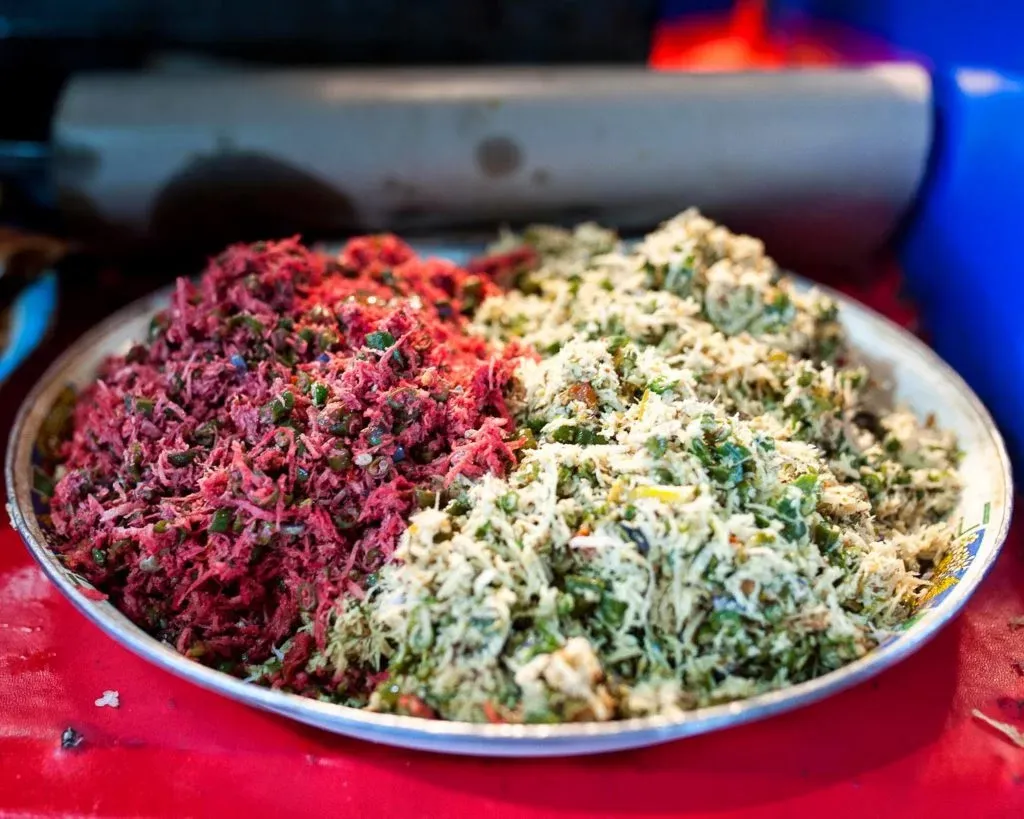
If there’s one dish that embodies community spirit, it’s Lawar. This colorful, aromatic mix of minced meat, grated coconut, vegetables, and spices is more than just food — it’s a ceremonial offering, a social glue, and a symbol of balance.
A History Rooted in Ceremony
Lawar dates back centuries, long before modern Balinese kitchens. Traditionally, it was prepared during large temple festivals or family ceremonies, such as odalan (temple anniversaries) or metatah (tooth-filing rituals). The dish was always made in large batches, involving the entire community — men mincing meat with cleavers, women preparing the spice paste, and elders ensuring the proportions followed ancestral rules.
The preparation itself is a ritual. Every ingredient carries meaning: the meat represents human strength, coconut symbolizes prosperity, and the spices reflect the island’s fiery energy. When all these come together, the result is a dish that captures the essence of harmony.
Types and Variations
There’s no single recipe for Lawar. Instead, there are dozens of variations depending on region, ingredients, and occasion.
- Lawar Merah (Red Lawar): Made with freshly cooked pork blood mixed into the dish, giving it a deep red hue and rich flavor. Traditionally prepared for temple ceremonies.
- Lawar Putih (White Lawar): A vegetarian or lighter version made without blood, using only vegetables, coconut, and spices.
- Lawar Ayam (Chicken Lawar): Popular in daily meals, with minced chicken replacing pork.
- Lawar Kacang (Green Bean Lawar): Combines blanched long beans with grated coconut and chili for a fresh, spicy salad-like version.
Each village, and often each household, has its own version — a reflection of family taste and local produce.
Serving and Significance
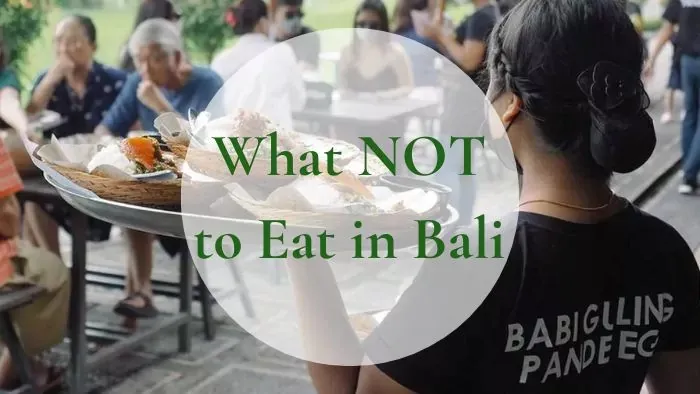
Lawar is rarely eaten alone. It’s usually served with rice, urutan (Balinese sausage), and sate lilit, forming a complete ceremonial platter. You’ll often see it offered in woven palm-leaf bowls during temple feasts, symbolizing unity and gratitude.
For many Balinese families, making Lawar together is an act of connection — with ancestors, with community, and with each other. It’s said that you can’t truly know Balinese culture until you’ve seen Lawar being made by hand, early in the morning, as the sound of cleavers fills the air.
Sate Lilit: The Art of Togetherness
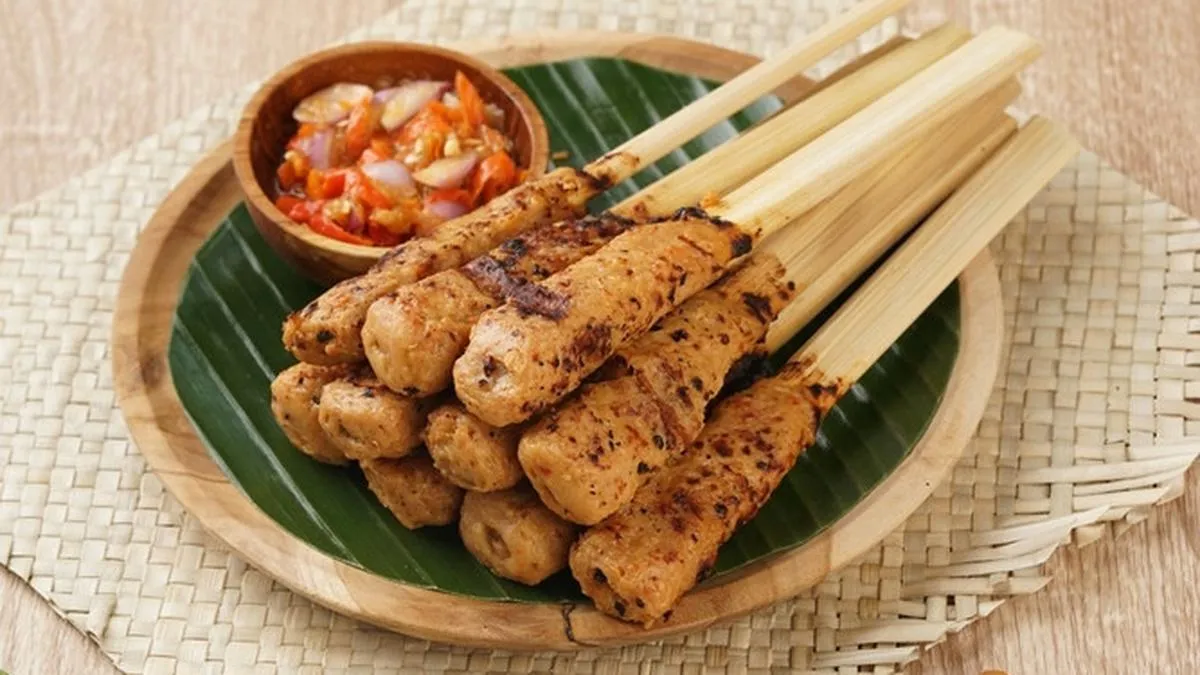
Where Lawar represents ritual, Sate Lilit represents creativity and collaboration. It’s one of the most famous dishes from Bali, instantly recognizable by its form — seasoned minced meat wrapped around bamboo sticks, lemongrass stalks, or even sugarcane, then grilled over coconut husk embers.
Origins and Cultural Roots
The word lilit means “to wrap” or “to twist.” Unlike other Indonesian satays where meat is skewered in chunks, Sate Lilit uses a paste of finely minced meat mixed with grated coconut, aromatic spices, and coconut milk. This mixture is then molded around the stick by hand — a delicate process that requires patience and skill.
Sate Lilit has its roots in Balinese Hindu ceremonies, where meat offerings were shaped this way as a symbol of transformation — turning raw ingredients into something sacred and shared. Over time, it became a beloved everyday dish, found in both temple festivals and roadside stalls.
Common Variations
- Sate Lilit Ikan (Fish Satay): Perhaps the most authentic form, especially from coastal areas like Sanur or Jimbaran. The mild flavor of fish blends beautifully with Balinese spices.
- Sate Lilit Ayam (Chicken Satay): A lighter, more accessible version for those who prefer poultry.
- Sate Lilit Babi (Pork Satay): Rich and savory, often served during ceremonies.
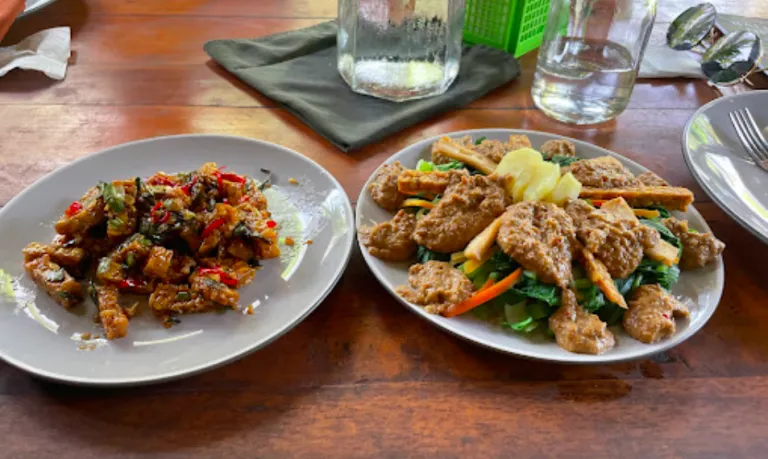
- Sate Lilit Vegetarian: Made with tofu, tempeh, or mushrooms for a modern, plant-based twist.
Each variation shares the same essence — a balance of spice, smoke, and texture that makes every bite unforgettable.
The Process: From Spice to Smoke
The secret to perfect Sate Lilit lies in the spice paste. Traditional cooks use base genep as the foundation, then mix it with coconut milk and shredded coconut to keep the meat moist and flavorful. Once shaped, the satay is grilled slowly over glowing coals, giving it a smoky aroma that lingers in the air long after it’s cooked.
Savoring the Experience
In Bali, Sate Lilit is often served alongside Lawar and steamed rice, or as part of nasi campur Bali — a mixed rice platter found across the island. Visitors can find it in humble warungs, street-side stalls, and high-end restaurants alike.
What makes it special isn’t just the taste, but the act of eating it fresh from the grill, often while chatting with locals or watching the sunset. It’s comfort food in its purest form — warm, communal, and deeply rooted in tradition.
Betutu: The Royal Dish of Bali
If Lawar is communal and Sate Lilit is creative, Betutu is royal. It’s a slow-cooked dish that requires patience, skill, and reverence — a true masterpiece of traditional Balinese cuisine.
The Origins of Betutu
Betutu originated from Gianyar and Gilimanuk, two regions known for their rich culinary traditions. Historically, it was reserved for royal ceremonies and temple offerings, as the preparation took an entire day. The dish showcases the Balinese philosophy of balance, where spice, heat, and time come together in perfect harmony.
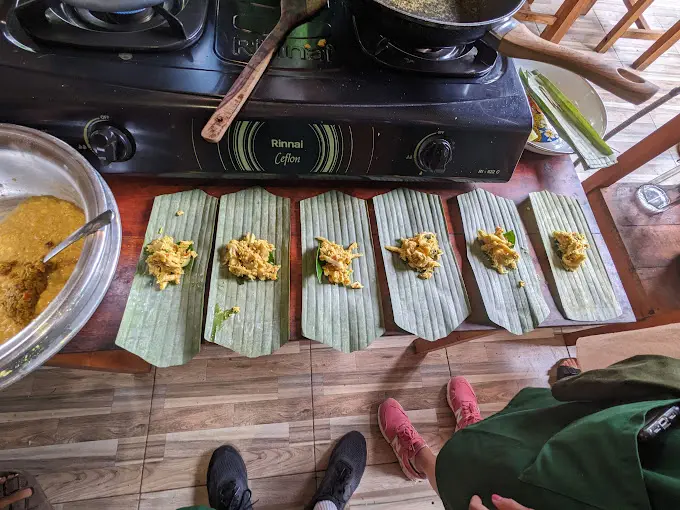
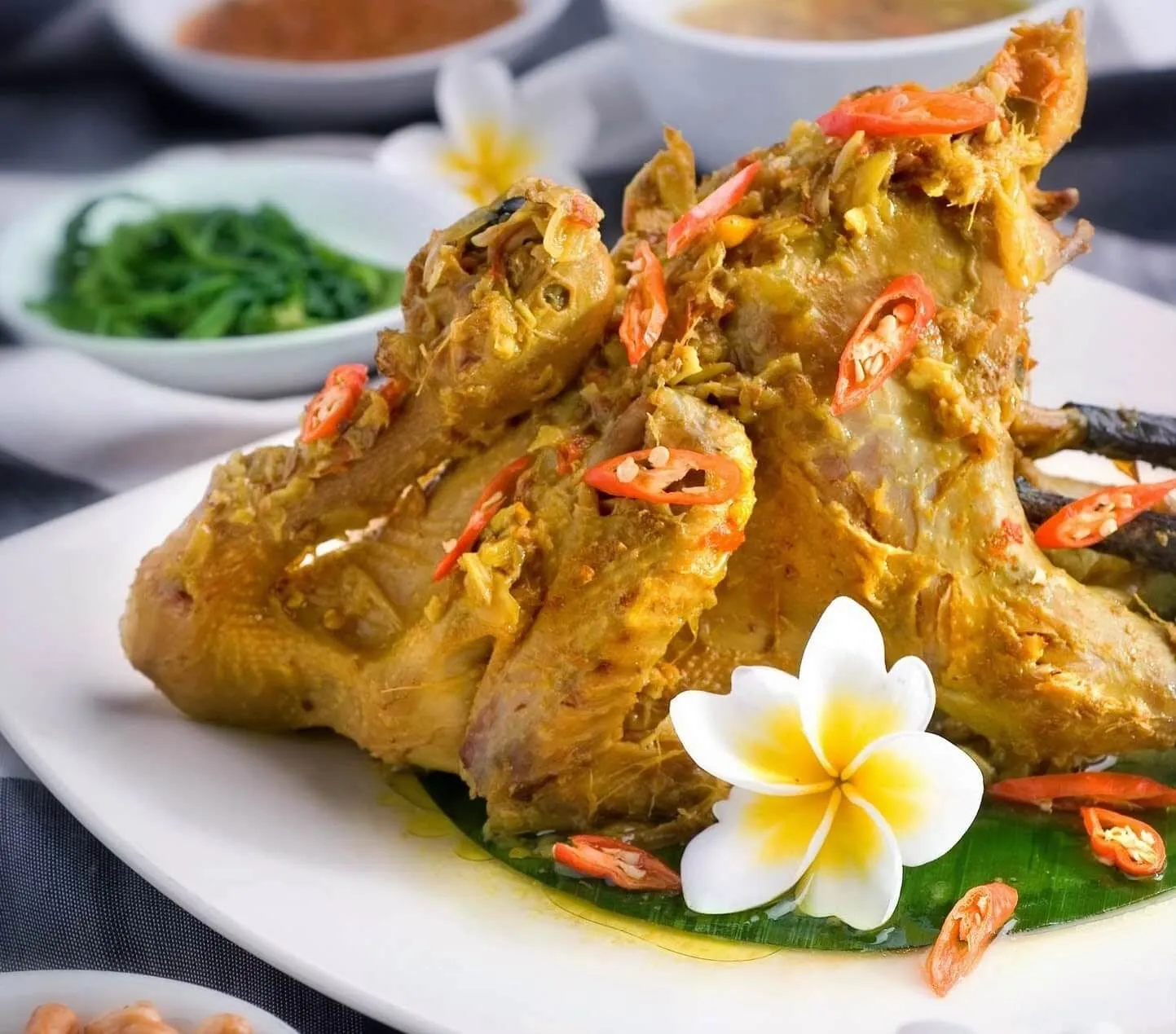
The name “Betutu” refers to both the dish and its unique cooking method — marinating whole chicken or duck in spice paste, wrapping it in banana leaves, and then slow-cooking it over firewood or in hot ashes until tender.
How It’s Made
The process begins with coating the entire bird in base genep, ensuring the spice penetrates deep into the meat. The cavity is often stuffed with more herbs and sometimes cassava leaves. Traditionally, the bird is then wrapped in banana leaves, sealed in banana trunk bark, and buried in embers for hours. The result is meat so tender it falls off the bone, infused with layers of earthy, spicy flavor.
Chicken vs. Duck Betutu
- Ayam Betutu (Chicken): Lighter and more widely served, this version can be found in restaurants all over Bali.
- Bebek Betutu (Duck): Considered the original and most luxurious form. The duck’s richer meat absorbs the spices beautifully, resulting in a deep, smoky taste.
In many villages, Betutu is still prepared for ceremonies or family celebrations. It’s not a weekday meal — it’s a feast, a culinary event that brings people together.
Modern Takes and Global Appeal
Today, Betutu has evolved. Many modern restaurants adapt the recipe for convenience, using ovens instead of ash pits, or serving shredded Betutu as part of nasi campur. Yet the heart of the dish remains unchanged — the devotion to slow cooking and the respect for spice.
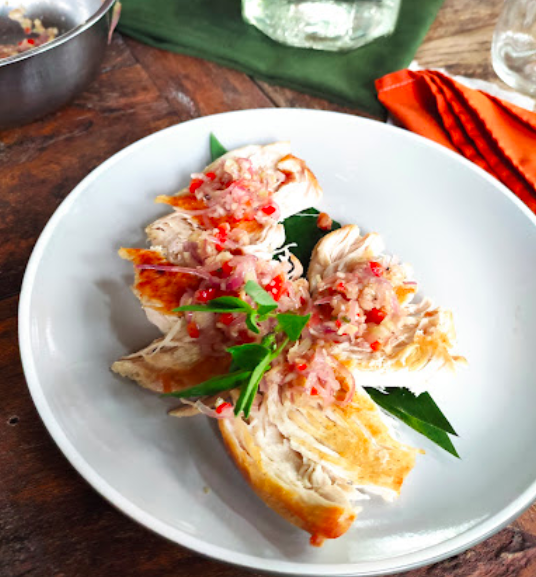
For visitors exploring Bali, tasting Betutu is like tasting time itself — a journey through tradition, patience, and love. Whether it’s served on a banana leaf in a local warung or plated elegantly in a fine restaurant, it tells the same story: of ancestors, rituals, and the island’s unshakable connection to flavor.
The Shared Spirit Behind the Three Dishes
Across the island of Bali, food is never a solitary act. It is conversation, ceremony, and memory served on a banana leaf. Nowhere is this truer than in the three dishes that stand as the cornerstones of traditional Balinese cuisine: Lawar, Sate Lilit, and Betutu. At first glance, they seem entirely different—the first a vibrant mix of meat and coconut, the second a bundle of smoky satay, the third a slow-cooked masterpiece sealed in banana leaves. Yet beneath their varied textures and colors runs a single current of meaning. They are all bound by the same spirit: a respect for spice, a sense of community, and a quiet reverence for balance.
Each dish begins with the same humble ritual—the making of base genep, that intricate spice paste of shallots, garlic, turmeric, and galangal. In every village kitchen, the rhythmic sound of pestle against mortar forms the island’s heartbeat. It is more than just preparation; it is meditation. Generations of cooks have repeated this act at dawn, before the first roosters cry, filling courtyards with the scent of earth and heat. That shared base reminds Balinese cooks that every flavor is part of something larger. Whether destined for the fiery Lawar, the fragrant Sate Lilit, or the gentle depth of Betutu, the paste binds the dishes together like verses in a sacred chant.
Lawar tells the story of community and balance. In village compounds, its preparation still gathers men and women side by side, chopping, mixing, and tasting. There is laughter, gossip, and the occasional friendly debate about how much chili is enough. Every handful of grated coconut, every spoonful of spice, is adjusted not by recipe but by instinct and the memory of past celebrations. The dish itself mirrors the island’s philosophy of harmony—between hot and cool, raw and cooked, the seen and unseen. To taste Lawar is to taste the very rhythm of Balinese life, where opposites don’t clash but coexist. For travelers who find themselves at a temple feast, a mouthful of Lawar becomes a quiet education in the art of balance.
Sate Lilit, by contrast, speaks of creativity and collaboration. The act of wrapping minced meat around a lemongrass stalk is as much an art form as it is cooking. It demands a gentle hand, a sense of proportion, and a patience learned only through repetition. Each satay stick carries the touch of the maker, and when placed over the fire, the aroma that rises is unmistakably Balinese—sweet smoke, coconut, and citrus leaf. It’s easy to see why visitors fall silent when watching it cook. There is something intimate in the scene: the flicker of embers on dark skin, the sheen of oil, the whisper of spices as they meet the flame. In that moment, Sate Lilit becomes more than food; it becomes theater. And when shared among friends, eaten hot and fresh, it captures the spirit of collaboration that has always defined the island’s kitchens.
Then there is Betutu, the dish of patience and reverence. Unlike the quick satisfaction of a grilled satay, Betutu asks for time—long hours of slow cooking that cannot be rushed. In ancient days, it was reserved for temple offerings and royal banquets, a dish worthy of the gods. Even now, in remote villages, families still begin the process before sunrise, rubbing a whole duck or chicken with base genep, wrapping it carefully in layers of banana leaves, and letting it cook under embers until sunset. The result is tender, perfumed meat that melts on the tongue, carrying the weight of generations within its fibers. To share Betutu is to participate in a tradition of patience, respect, and gratitude—values that have guided Balinese life for centuries.
Together, these three dishes form a kind of edible philosophy. Lawar teaches balance, Sate Lilit celebrates creativity, and Betutu honors time. They are the three chapters of Bali’s culinary story, each one distinct but impossible to separate from the others. To understand one without the rest would be like trying to read a novel by turning only a few pages. The full meaning reveals itself only when the flavors meet—spicy against smoky, smoky against tender, tender against bright. That is when a traveler begins to understand what traditional Balinese cuisine truly means.
Food scholars often describe Balinese cooking as “communal art.” Yet to those who have sat cross-legged in a village courtyard, watching elders stir pots the size of drums, it feels more like storytelling. Every ingredient tells of a season; every spice carries a trace of the island’s volcanic soil. Even the tools—the heavy mortar, the woven trays, the banana leaves—bear marks of hands that have used them for decades. Lawar, Sate Lilit, and Betutu are therefore not recipes; they are living memories. Through them, grandmothers whisper advice to daughters, neighbors trade secrets, and festivals come alive with color and scent.
What makes this trinity of dishes especially powerful is their ability to turn ordinary moments into connection. On a humid evening in Ubud, a traveler might share a plate of Sate Lilit with a street vendor who explains how his grandmother taught him the perfect spice ratio. In a family compound in Gianyar, a visitor might be handed a small bowl of Lawar still warm from the mortar, the cook smiling as she watches the first bite. And in a seaside restaurant in Jimbaran, Betutu might arrive steaming and golden, the waiter explaining that the duck was marinated overnight, just as his father once did. In each exchange, food becomes language—a way to bridge cultures without words.
The shared spirit behind these dishes also reflects the Balinese idea of Tri Hita Karana, the philosophy of three harmonies: between humans and gods, humans and nature, and humans and each other. Lawar, Sate Lilit, and Betutu embody these relationships perfectly. Lawar connects people to the earth through its fresh herbs and vegetables. Sate Lilit reminds them of the creative energy that flows between individuals. Betutu honors the divine patience of nature’s processes. Each bite is a small act of harmony, a reminder that life, like cooking, is about balance and respect.
As the world modernizes and Bali grows busier with travelers, these dishes remain the island’s quiet teachers. They invite visitors to slow down, to listen, to taste with intention. Modern chefs may reinterpret them on white plates with artistic swirls, but the heart of the food stays unchanged: it’s still about people gathering, sharing, and remembering who they are. The smell of roasted coconut or the first spark of chili on the tongue carries more than flavor—it carries belonging.
To walk through a Balinese market at dawn is to see this spirit in motion. Vendors unwrap banana leaves to reveal freshly made Lawar, the air thick with spice. A few stalls away, skewers of Sate Lilit hiss over coals, their smoke curling into the blue morning. Somewhere deeper in the market, a woman sells Betutu wrapped in leaves, still warm, the aroma of turmeric and lemongrass beckoning passersby. Tourists pause to take photos, but the locals simply smile; for them, these scents are home.
Ultimately, the shared spirit behind Lawar, Sate Lilit, and Betutu is not just culinary—it is human. It reminds anyone who tastes them that good food is never merely about hunger. It is about belonging to a story that started long before us and will continue long after. Each dish, in its own way, is an invitation to participate—to chop, to stir, to wait, to taste, and to share. In that act of sharing, the island of Bali reveals its truest self: generous, balanced, endlessly creative, and always patient.
So when travelers speak of traditional Balinese cuisine, they are not only describing a collection of recipes. They are speaking of a living conversation carried by spice and smoke, one that began with Lawar, deepened with Sate Lilit, and found its heart in Betutu. Together, these three dishes remind the world that food, at its best, is not about complexity or presentation, but about connection—the simple, sacred joy of tasting life together.
Experiencing Traditional Balinese Cuisine
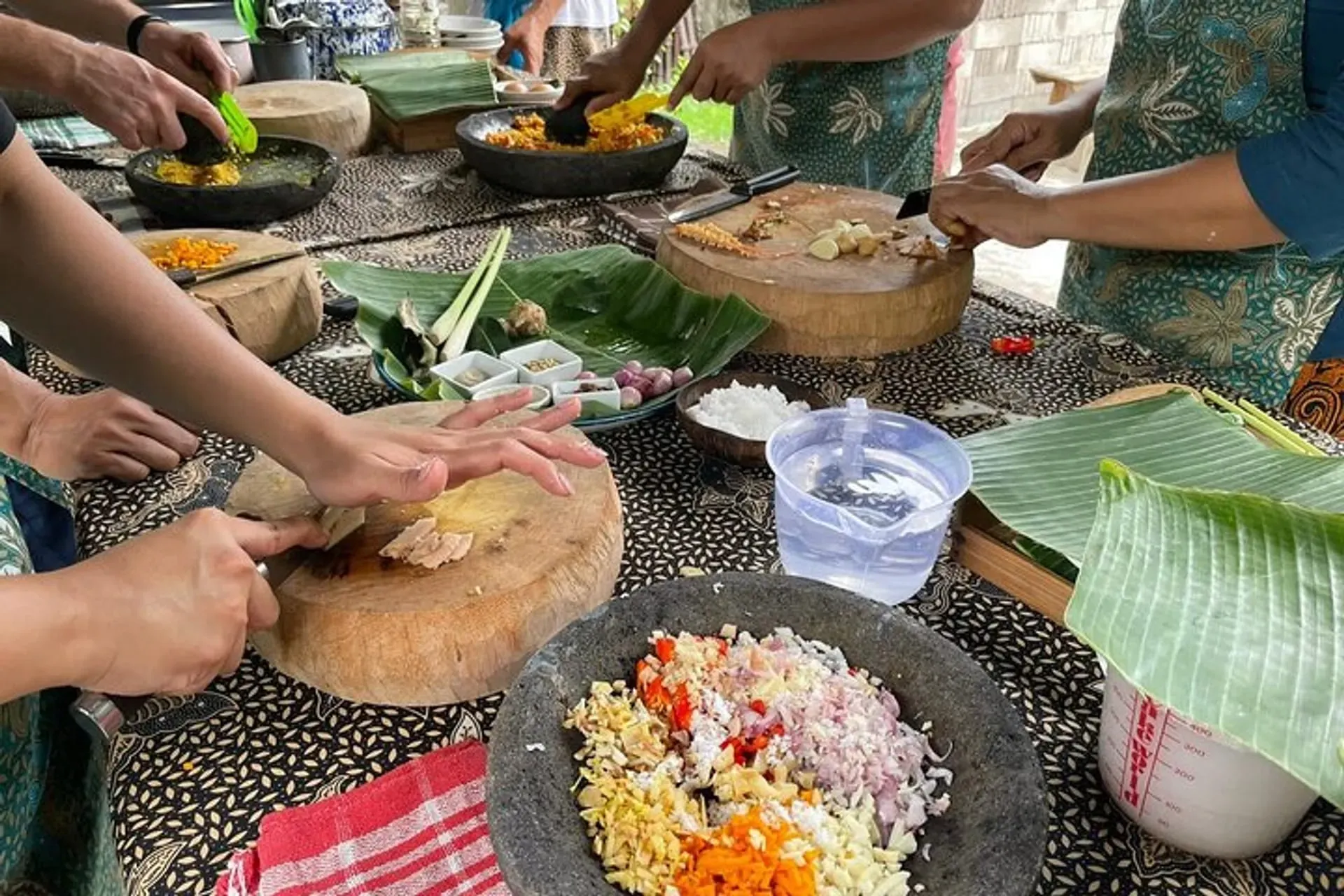
For travelers who come to Bali, tasting these dishes is more than a culinary adventure. It’s a doorway into Balinese life. Many restaurants and cooking classes now invite visitors to learn how to make Lawar or Sate Lilit by hand, giving them a firsthand look at the artistry behind each meal.
In traditional villages, you can still see the old ways in action — spices ground on stone mortars, banana leaves folded with care, and entire families cooking together for festivals. It’s an experience that reminds you food, here, is never just food. It’s connection.
Why These Dishes Matter Today
In a fast-changing world, preserving traditional Balinese cuisine means preserving identity. Younger generations are now rediscovering these recipes, finding ways to blend tradition with modern lifestyles — from vegan versions of Lawar to Betutu-inspired fusion dishes.
But at their core, these foods remain the same: they honor the land, the gods, and the people who make them. And as long as there are hands to grind spices and hearts to share meals, the stories of Lawar, Sate Lilit, and Betutu will continue to be told.
Traditional Balinese Cuisine: A Taste of Bali’s Soul
Lawar, Sate Lilit, and Betutu aren’t just three dishes — they’re three expressions of Bali’s soul. Each one represents centuries of history, faith, and love for flavor. Together, they form the foundation of traditional Balinese cuisine, a living tradition that continues to evolve while keeping its roots deep in the island’s culture.
For those who come to Bali seeking more than beaches and temples, let your journey begin at the dining table. Taste the Lawar, smell the smoke of Sate Lilit, and savor the slow spice of Betutu. In every bite, you’ll find a story — and perhaps, a piece of Bali itself.