There’s a quiet magic in the way Bali celebrates life — through rituals, colors, and flavors that feel both earthly and divine. To understand the secret behind Bali’s sacred ceremonies and food, you must look beyond the plates and into the island’s soul. Every meal is an offering, every spice a prayer. From dawn preparations in family courtyards to temple feasts filled with laughter and incense, Balinese cuisine carries stories of devotion and balance. Here, food isn’t just nourishment; it’s the heartbeat of faith, connecting people, gods, and nature in one timeless rhythm.
The Secret Behind Bali’s Sacred Ceremonies And Food: Where Every Meal Has a Soul
When you step onto the island of Bali, you can feel that life here moves with ritual. From the morning offerings of flowers and rice on doorsteps to the aroma of incense that dances in the air, every moment seems touched by something sacred. Food, too, is never “just food.” It is a language of devotion, a bridge between humans and the divine.
Balinese people don’t cook only to eat. They cook to give thanks, to celebrate, and to maintain harmony between the seen and unseen worlds. The flavors, the textures, the colors—all carry meanings rooted in centuries of spiritual belief.
In this article, we’ll explore the intimate relationship between Balinese cuisine and spirituality, uncovering how rituals, ceremonies, and traditional dishes reflect the island’s soul.
The Philosophy Behind Balinese Food
Balinese life is guided by a spiritual concept called Tri Hita Karana, which translates to “three causes of well-being.” It teaches that happiness and balance come from harmony among three relationships:
- Parahyangan – between humans and the gods.
- Pawongan – among humans themselves.
- Palemahan – between humans and nature.
This philosophy isn’t just spoken—it’s lived. You’ll find it in how Balinese people farm, harvest, cook, and eat. The rice fields are not only sources of food but also sacred spaces where humans collaborate with nature and divine forces. Every step, from planting to cooking, becomes an act of gratitude.
So when a Balinese family prepares a dish, it’s not only a recipe—it’s a ritual of maintaining cosmic balance.
Offerings: The Heart of Balinese Daily Life
One of the first things visitors notice in Bali is the countless small offerings called canang sari. These little palm-leaf baskets filled with flowers, rice, and sometimes cookies or incense are everywhere—on shrines, sidewalks, and even on scooters.
Each offering carries deep symbolism. The rice represents sustenance and life. Flowers embody beauty and sincerity. The incense acts as a bridge, sending prayers heavenward through fragrant smoke.
And here’s the beautiful part: many of these offerings include small portions of cooked food—tiny tastes of whatever the family eats that day. Before anyone takes the first bite of a meal, the gods are offered the first share. It’s a reminder that nourishment, like life itself, is a gift to be respected.
Food as a Medium of Worship
In Balinese Hinduism, food is one of the most direct ways to connect with the divine. The act of preparing and presenting food is seen as both an offering and a meditation.
For example, before major ceremonies, families spend days cooking traditional dishes like lawar, sate lilit, and ayam betutu. The process isn’t rushed; it’s communal and filled with purpose. Each person has a role—grating coconut, slicing herbs, grinding spices by hand in a stone mortar.
It’s not just about flavor. It’s about energy. Balinese people believe that the energy (taksu) of the cook affects the spiritual purity of the dish. Cooking with a calm and focused mind brings balance and blessings to everyone who eats it.
The Sacred Dishes of Ceremonies
1. Lawar: A Dish of Balance and Unity
If you’ve ever wandered into a Balinese family compound early in the morning before a ceremony, you’ll hear the unmistakable rhythm of knives against wooden blocks. Tok-tok-tok. The sound is steady, almost meditative. That’s the sound of lawar being born — the heart of Balinese communal cooking.
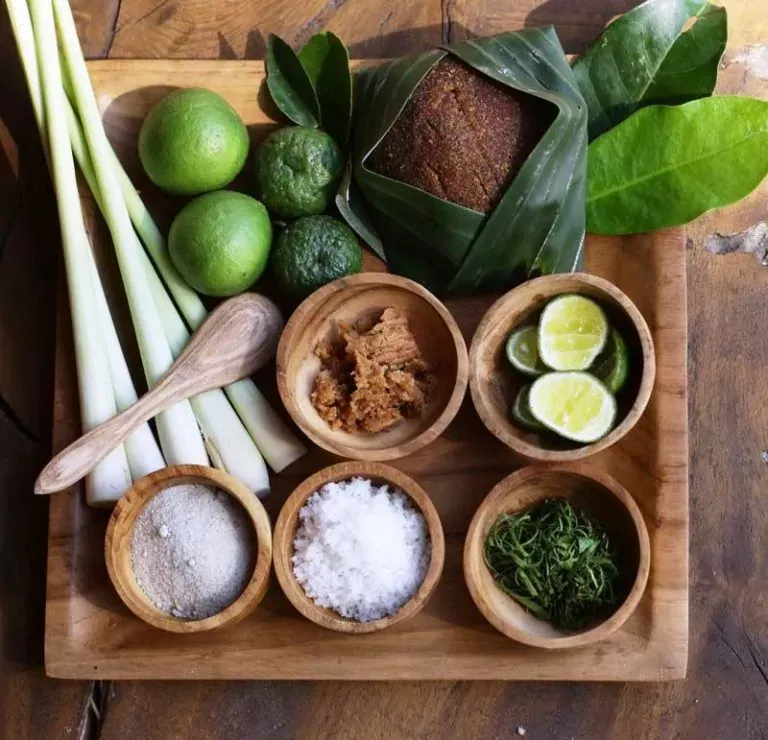
Lawar is not just a dish; it’s a conversation between earth and spirit. Finely chopped long beans, young jackfruit, or coconut meet minced meat — sometimes pork, sometimes duck — all bound together with a vivid blend of herbs, spices, and grated coconut. When you lean close to the bowl, the scent rises like incense: lemongrass, kaffir lime, galangal, and the deep whisper of turmeric root. Every ingredient is alive, vibrant, and meaningful.
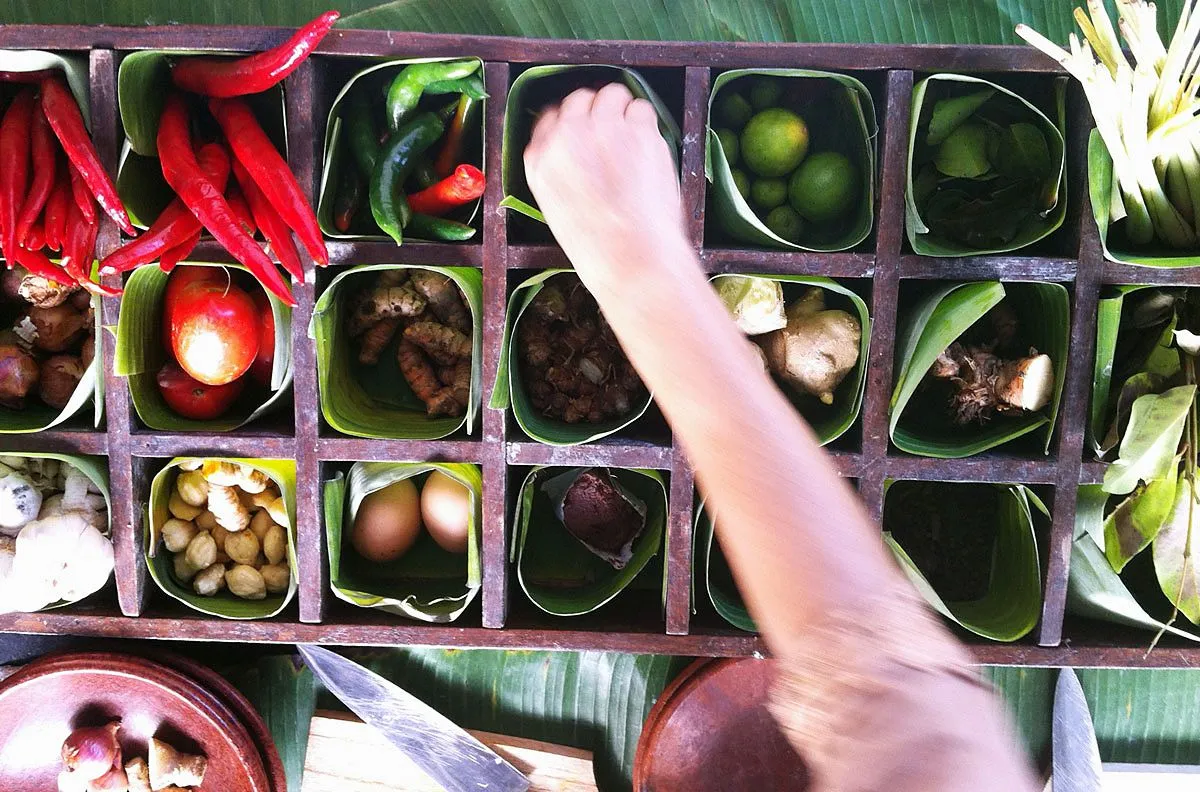
In many villages, the making of lawar is a collective act. Men sit in circles, laughing, teasing, talking about the weather or temple duties, while their hands work quickly. Women prepare the spice base — the base genep, a symphony of ground shallots, garlic, candlenuts, chili, and aromatic roots. The air hums with warmth and familiarity.
And then comes the moment of transformation: the mixing. Hands dive into the bowl, turning, folding, pressing. If animal blood is added — a traditional touch in certain ceremonies — it’s not done lightly. It symbolizes life force, sincerity, and truth. To the Balinese, blood isn’t something to be hidden; it’s a reminder of vitality, the red thread connecting the body and spirit.
The beauty of lawar lies in its colors. Red lawar, fiery and bold, is made with blood and spice — representing Brahma, the creator. White lawar, pure and mild, embodies Vishnu, the preserver. Green or black lawar, often tinged with young jackfruit or vegetable leaves, honors Shiva, the destroyer who clears the path for renewal. Together, they mirror the sacred triad of creation, preservation, and transformation — the rhythm of life itself.
When served, lawar isn’t just placed on a plate. It’s first offered to the gods, a small portion set aside on a banana leaf, placed gently among flowers and incense. Only after the divine has been fed may the people eat. And when they do, it’s with reverence and delight — a taste that’s earthy, spicy, and alive with energy. Lawar is more than food. It’s philosophy you can taste.
2. Ayam Betutu: The Ritual of Patience and Devotion
If lawar is the heartbeat of Balinese daily life, then ayam betutu is its sacred pulse. The name alone stirs emotion among Balinese cooks — it’s the dish of ceremonies, weddings, and temple feasts. And yet, at its core, it’s also a lesson in patience, devotion, and respect.
Ayam betutu begins long before the cooking itself. It starts at dawn, in the rustle of banana leaves and the scent of ground spices. The chicken is cleaned carefully — not hurriedly — and marinated with a generous hand. The base betutu spice paste is no ordinary blend; it’s an orchestra of shallots, garlic, turmeric, coriander, ginger, nutmeg, candlenuts, and chili, pounded into a fragrant golden paste that clings to the skin like sunlight.
Then comes the wrapping. The seasoned chicken is filled with more spices, its cavity packed like a treasure chest of flavor. It’s wrapped in banana leaves — green, supple, and slightly smoky when warmed — then secured tightly in layers of bark or cloth. Traditionally, it’s buried beneath smoldering rice husks or embers and left to cook for hours, sometimes overnight.
During that time, the whole compound smells of warmth and earth. The smoke rises gently, curling through the air like an offering of its own. The slow fire does what no modern oven can — it infuses. Every layer of spice seeps inward, merging into something tender, rich, and deeply aromatic.
In Bali, they say betutu teaches you to wait. It cannot be rushed, because good things — like devotion, love, or enlightenment — need time to ripen. When finally unwrapped, the chicken glistens with golden oil, the flesh falling softly from the bone. Steam escapes with a sigh, carrying the scent of lemongrass and turmeric that clings to your skin.
Betutu is rarely eaten alone. It’s shared among family, neighbors, or temple devotees after prayers. Each bite feels like a blessing — not only for the taste but for the intention behind it. To eat betutu is to partake in the spirit of patience and gratitude that defines Balinese life.
3. Sate Lilit: The Bond of Togetherness
In Bali, togetherness is as essential as rice. It’s in the way families gather to make offerings, the way neighbors share tools during harvest, and, of course, the way they cook. Few dishes capture this spirit better than sate lilit, the “wrapped satay.”
Unlike the straight, skewered satays of Java or Sumatra, sate lilit coils its marinated meat around a stick — often a piece of lemongrass, chosen for its fragrance. The meat itself is finely minced, mixed with grated coconut, shallots, chili, kaffir lime leaves, and a touch of shrimp paste. When you press the mixture onto the stick, the texture is soft and yielding, like clay warmed by the sun.
But what truly gives sate lilit its magic is the process. It’s always a group effort. Mothers and daughters roll the mixture onto the sticks while fathers tend the coals. Children hover nearby, sneaking tastes or fanning the fire. The air fills with laughter, with the hiss and crackle of fat dripping into flame, with stories passed between generations.
Each lemongrass stalk releases its citrusy perfume as the satay cooks, mingling with smoke and spice. The scent is irresistible — a whisper that drifts through alleys and temple courtyards. When it’s done, the meat is slightly charred on the outside, juicy within, carrying layers of taste: sweet, salty, and aromatic all at once.
Sate lilit is often prepared for festivals or family gatherings, symbolizing unity and shared purpose. Its shape — the meat wrapped around the stick — echoes the Balinese belief in interconnectedness. Like the ingredients that cling together, so do families and communities, bound by mutual respect and affection.
To eat sate lilit is to remember this bond. The flavor is comforting, but it’s the warmth of the people around you that makes it unforgettable.
4. Jaja Bali: Sweet Offerings for the Gods
When ceremonies draw to a close and prayers fade into the hum of gamelan music, there’s always one final act of gratitude: sweetness. And in Bali, sweetness comes in the form of jaja — the vibrant, delicate cakes that look like edible prayers.
The making of jaja is an art passed quietly from mothers to daughters. In village kitchens, you’ll see trays lined with banana leaves, bowls of grated coconut, sticky rice flour, and palm sugar glowing amber in the morning light. The air smells faintly of vanilla and roasted coconut, and the rhythmic clinking of bamboo steamers sets a gentle tempo.
Each variety of jaja tells its own story. Jaja injin, made from black sticky rice, gleams like polished obsidian and tastes of earthy sweetness. Jaja laklak, thin green pancakes made with pandan and rice flour, are served with molten palm sugar syrup and grated coconut — simple yet divine. And klepon, those tiny rice balls filled with liquid palm sugar, burst like caramel blessings in your mouth.
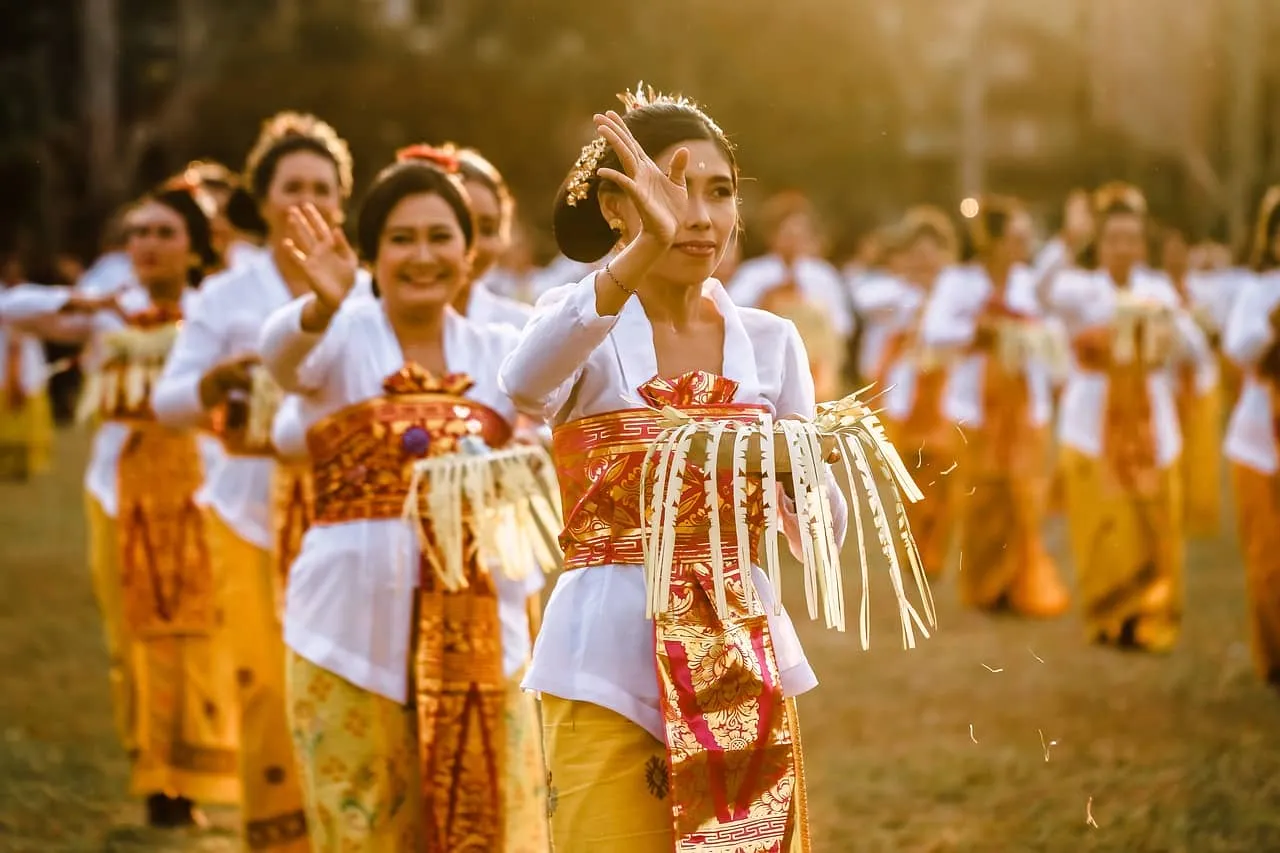
But jaja is not merely dessert. It’s an offering. Before anyone tastes it, these sweets are first arranged into gebogan — tall towers of fruit, flowers, and cakes that women carry gracefully on their heads to temple ceremonies. The towers are colorful, almost sculptural, each layer representing abundance, gratitude, and harmony.
The sight of a gebogan procession is unforgettable: women in bright lace kebayas walking in rhythm, the sun glinting off their golden trays, the fragrance of flowers mingling with the sugary scent of jaja. It’s beauty made visible — devotion turned into art.
After the offerings are blessed and prayers said, the sweets are shared. That’s when the temple courtyard becomes a place of laughter and sweetness. Children lick sticky fingers; elders smile with quiet joy. In those moments, you realize that in Bali, even dessert has a soul.
Jaja reminds everyone that life, no matter how complex or sacred, should end with gratitude — and a little sweetness.
The Rhythm of Ritual and the Kitchen
Cooking for a Balinese ceremony isn’t a private task done quietly in a home kitchen—it’s a community affair.
When a big festival or odalan (temple anniversary) is coming, everyone contributes. Men handle the heavy cooking in the bale pawedan (ceremonial kitchen), women prepare offerings and decorations, and children help carry trays or fetch water. The entire village becomes a living kitchen, humming with sound, laughter, and purpose.
The food cooked here isn’t eaten immediately. Much of it is first presented to the gods, carefully arranged on trays and blessed by a pemangku (temple priest). Only after the ceremony is complete does the community share the meal together. Eating, then, becomes a sacred act—a closing of the spiritual circle.
The Role of Food in Major Balinese Ceremonies
Galungan and Kuningan
These twin festivals celebrate the victory of dharma (good) over adharma (evil). Families prepare lawar, sate, and nasi kuning (yellow rice) to welcome ancestral spirits who visit during Galungan. Ten days later, on Kuningan, they send the spirits back to heaven with gratitude, marked again by shared meals.
Ngaben (Cremation Ceremony)
Although somber in purpose, ngaben is a celebration of the soul’s liberation. Families prepare large amounts of food, not for mourning but for honoring the transition of life. Guests are fed generously—sharing food becomes a way to affirm the continuity of existence.
Odalan (Temple Anniversary)
Every temple in Bali has its own odalan, usually celebrated once a year. The temple grounds turn into a sea of color, dance, and food. Each household brings offerings, from fruit towers to complete meals, symbolizing devotion and community strength.
The Symbolism of Ingredients
Balinese cooking is deeply symbolic. Every ingredient carries meaning:
- Rice is life and purity.
- Coconut represents the human body and soul—its every part is useful.
- Spices like turmeric, ginger, and galangal symbolize protection and cleansing.
- Chili brings vitality and courage.
Even the act of grinding spices in a mortar and pestle holds meaning—it’s believed to awaken the ingredients’ spirit, blending their essence into harmony.
Cooking as a Spiritual Discipline
In Bali, cooking isn’t just domestic—it’s spiritual training. Before entering the ceremonial kitchen, cooks may bathe and purify themselves. The space is treated as sacred; people speak softly, laugh gently, and move with intention.
The kitchen, in this sense, becomes a temple. Fire is the divine witness, smoke carries prayers, and the meal is the offering.
It’s a practice that invites mindfulness. As one elder in Ubud once said, “When we cook for the gods, we remember who we are.”
How Modern Bali Keeps the Tradition Alive
While Bali has become a global travel hub, the connection between food and spirituality remains strong. You can see it in family compounds, local warungs, and even modern restaurants that blend ritual elements into their menus.
Some chefs now reinterpret ceremonial dishes in contemporary styles—serving betutu ravioli or lawar salads—but still begin their cooking by making a small offering. It’s a beautiful evolution, showing that tradition can live and breathe without losing its soul.
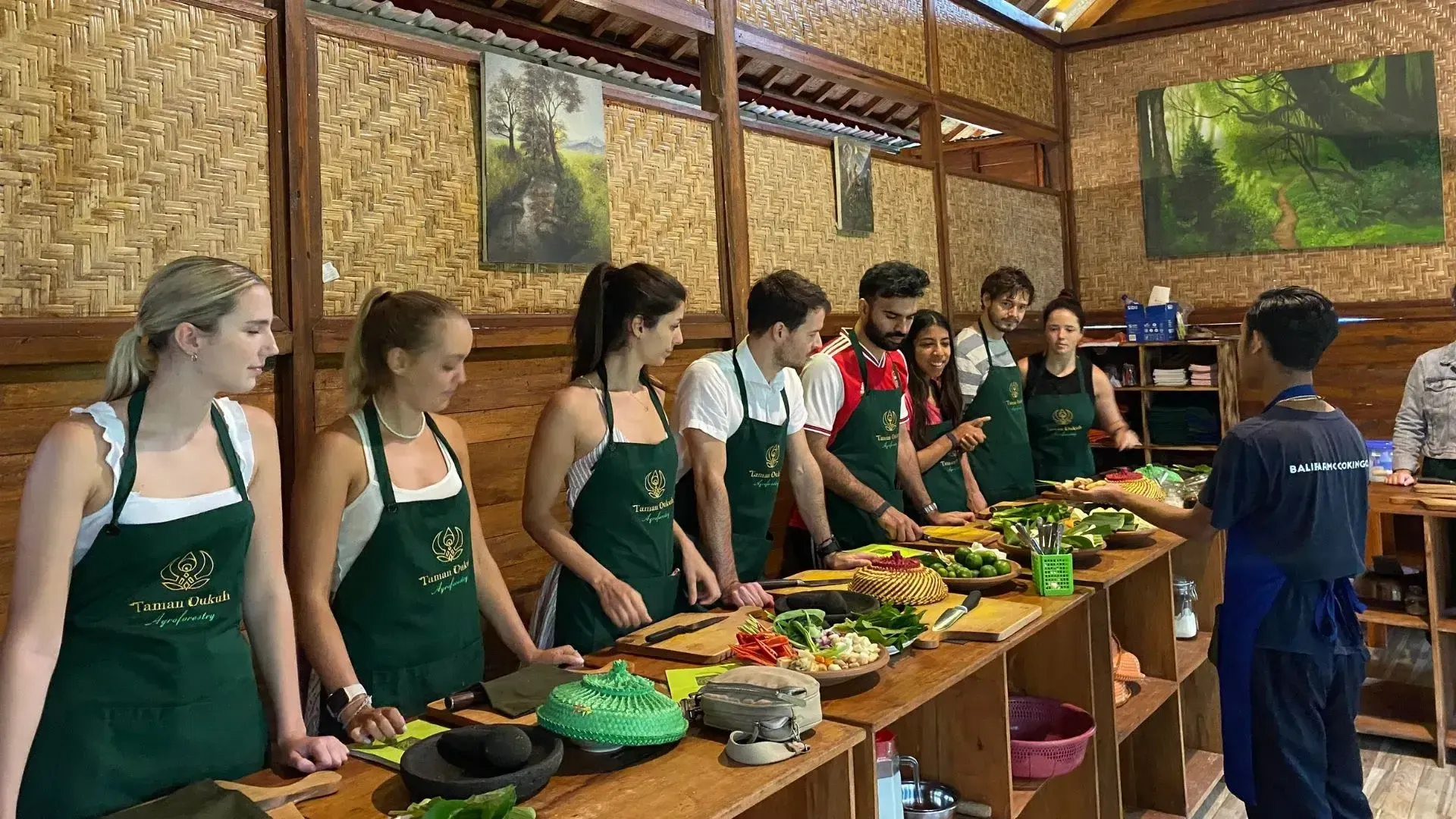
Many homestays and cultural programs invite travelers to experience this side of Bali through cooking classes linked to temple visits or morning offering rituals. These experiences go beyond tourism—they help visitors understand that Balinese food is not a product of taste alone, but of faith and harmony.
The Deeper Lesson for Visitors
For travelers, tasting Balinese cuisine can be a doorway into understanding the island’s worldview. Every bite carries layers of meaning—community, gratitude, respect, and love.
When you eat a meal prepared after a ceremony, you’re not just enjoying a local delicacy; you’re sharing in a philosophy that sees food as a living bridge between worlds.
So next time you’re in Bali and someone offers you lawar or betutu, remember—it’s more than hospitality. It’s an invitation into a culture that sees divinity in everyday life.
The Secret Behind Bali’s Sacred Ceremonies And Food: Where Spirit Meets Flavor
In Bali, food and faith are inseparable. Each grain of rice, each fragrant spice, and each shared meal tells a story of connection—to the land, to the gods, and to one another.
This sacred bond between cuisine and spirituality is what gives Balinese culture its warmth and resilience. It’s not just about keeping old recipes alive—it’s about keeping balance alive.
So, whether you’re wandering through a bustling market in Gianyar or sitting quietly in a family compound watching morning offerings, take a moment to feel the rhythm that guides it all. The ceremony, the flavor, the devotion—they’re all part of the same beautiful dance.
And that’s the true secret behind Bali’s sacred ceremonies and food: every dish is a prayer, and every prayer is a feast.
In the end, the secret behind Bali’s sacred ceremonies and food is not found in recipes or rituals alone, but in the spirit that binds them. It’s in the patience of slow cooking, the joy of sharing, and the reverence woven into every offering. Each dish tells a story of gratitude — a reminder that food, in Bali, is both gift and prayer. Whether you taste it in a temple courtyard or a humble village kitchen, you’re not just eating. You’re partaking in a centuries-old conversation between earth and the divine.