Morning in Bali begins with the hum of life itself. The scent of frangipani floats through the air, roosters echo from the rice fields, and somewhere, a woman gently stirs coconut milk over a clay stove. The island’s rhythm is slow, patient, and deeply connected to the earth — and nowhere is that connection felt more intimately than in its food. For those seeking vegan living, Bali is more than a destination. It’s a living example of how plant-based cuisine can be sacred, joyful, and rooted in culture.
The Roots of Vegan Culture in Bali
Long before the words “vegan” or “plant-based” became global buzzwords, Balinese households had already been practicing a lifestyle that respected plants, animals, and the natural world. Daily offerings called canang sari — made of flowers, rice, and leaves — remind everyone that food is a gift, not a commodity.
Traditional Balinese meals are built around fresh produce grown in volcanic soil. Rice is the centerpiece, supported by an abundance of vegetables, tofu, tempeh, jackfruit, coconuts, and fragrant herbs. Meat, when used, often appears as a complement, not the main act. This makes the Balinese kitchen naturally welcoming to anyone following a vegan or vegetarian path.
Underneath it all lies Tri Hita Karana — the philosophy of harmony between humans, nature, and the divine. In every garden, market, and kitchen, that principle quietly shapes how food is grown, cooked, and shared.

Food as an Expression of Harmony
To truly understand vegan Bali, one must first grasp how the Balinese people see food — not as a mere necessity, but as a living connection between the human spirit and the natural world. On this island, eating has never been just an act of survival. It is an expression of gratitude, a rhythm of giving and receiving that mirrors the heartbeat of Bali itself.
In Balinese culture, food carries meaning far beyond taste or nutrition. Each grain of rice, each drop of coconut milk, each slice of turmeric has a role in the grand choreography of life. The locals often say that cooking is a prayer you can smell — and when you watch a Balinese woman gently mixing grated coconut with aromatic herbs, you begin to understand what that means. Her movements are unhurried, deliberate, filled with a quiet reverence for what nature provides. It’s as if every stir of the spoon is a conversation with the earth.
Coconut, for instance, is more than a fruit here. It’s a symbol of purity and renewal, used in offerings and daily meals alike. Every part of it serves a purpose — the water to cleanse, the flesh to nourish, the husk to fuel the fire. In Balinese hands, nothing goes to waste. Rice, the island’s lifeblood, is seen as a sacred gift from Dewi Sri, the goddess of fertility and prosperity. Farmers plant, tend, and harvest it with rituals that mark the changing of the seasons, each step a gesture of respect. Even the smallest kitchen in a village home feels like an altar to this cycle of life.
Then there are the spices — the golden thread that weaves through every Balinese dish. Turmeric, with its deep yellow hue, is not just a flavoring but a healer, believed to cleanse both body and soul. Galangal and lemongrass add brightness and balance, while chilies awaken the senses, symbolizing energy and passion. Together, they create a kind of culinary harmony that feels almost musical. Each spice has its own note, and when combined in the right proportions, they sing — not loudly, but with a quiet confidence born from centuries of tradition.
What makes Balinese cooking so extraordinary is this deep spiritual awareness that infuses even the simplest meal. A Balinese cook doesn’t just prepare food; they participate in the rhythm of nature. The ingredients are gathered with mindfulness, often from gardens just steps away from the kitchen. The soil that grows the vegetables is treated with care, the water that nourishes the plants is blessed through daily offerings. In this way, food becomes a bridge between the divine, the land, and the people who depend on it.
When a Balinese meal is served, it carries the energy of this entire process — the respect, the gratitude, the intention. Eating, then, becomes an act of communion. It’s a reminder that to live well is to live in balance: between hunger and satisfaction, work and rest, giving and receiving. That belief naturally shapes a culture of sustainability. There is no need for lectures on zero waste or eco-consciousness when those values are already embedded in the daily act of cooking and eating.
In a traditional village, you might see how this philosophy plays out in quiet, practical ways. Vegetable scraps are fed to livestock, coconut husks become fuel, and leftover rice is offered to the spirits before dawn. The kitchen, often open to the air, feels alive with the scent of earth and smoke. Chickens cluck nearby, the sound of pestle against mortar echoes through the courtyard, and a sense of timelessness hangs in the air. It’s in these small details that the deeper harmony reveals itself — a rhythm that has guided the Balinese way of life for generations.
For the visitor, this harmony is something felt more than explained. You sense it in the calm way a cook grinds bumbu Bali by hand, or in the gentle laughter shared around a communal meal. You taste it in the food — fresh, fragrant, layered with care. And if you’re open to it, you begin to realize that the essence of vegan Bali isn’t about restriction or trendiness. It’s about returning to the source, to a way of eating that honors life in every form.
The awareness that “what comes from the soil should return to it” is not just poetic — it’s practical. It shapes farming practices, limits excess, and nurtures biodiversity. Many Balinese farmers still rely on the ancient subak system, a cooperative method of irrigation recognized by UNESCO. This system is guided by the philosophy of Tri Hita Karana, the balance between humans, nature, and the divine. Every drop of water, every plot of land, is shared and managed with the community in mind. It’s a living expression of harmony, sustained through food.
When seen through this lens, veganism in Bali becomes more than a dietary choice — it’s an alignment with the island’s very essence. To eat plant-based here is to step into an ancient dialogue between humans and the earth, one that has been unfolding long before the rest of the world called it “sustainable living.” It’s a story written in coconut milk, in grains of rice, in the bright orange of turmeric and the deep green of banana leaves. And like all good stories, it reminds us of something we already know: that the way we eat shapes the way we live, and the way we live shapes the world we share.

Bumbu Bali: The Heartbeat of Flavor
If the Balinese kitchen were a living being, bumbu Bali would be its heartbeat — steady, vibrant, and impossible to ignore. It’s not a single recipe, but a rhythm, a foundation that gives life to almost every dish found on the island. To understand bumbu Bali is to understand the very language of Balinese cooking, a language spoken not with words but with the pounding of pestle and mortar.
In a quiet kitchen somewhere in rural Bali, morning light filters through bamboo slats. A woman sits cross-legged on the floor, her hands moving with calm precision. Before her lies a mosaic of color — golden turmeric, fiery chilies, pearly cloves of garlic, and slender stalks of lemongrass. There’s no rush. Every ingredient is chosen, peeled, and sliced with intention. The stone mortar waits like a loyal companion, worn smooth from years of use. When she begins to grind the ingredients together, the air comes alive with scent — sweet, sharp, earthy, and warm all at once. That sound, the steady duk-duk-duk of the pestle, is the pulse of the Balinese home.
Bumbu Bali is more than a spice blend; it’s the island’s collective memory. Each household has its own variation — some add roasted candlenuts for richness, others a hint of coriander or palm sugar for balance. But the essence remains the same: it’s a celebration of Bali’s fertile land and the abundance it offers. The ingredients are simple, yet when combined, they carry the complexity of centuries. This is flavor built not in laboratories or test kitchens, but in backyards, in the wisdom of grandmothers, in the rhythm of daily life.
What makes bumbu Bali so extraordinary is not just its taste, but its intention. In many Western kitchens, cooking begins with a recipe. In Bali, it begins with energy — the belief that food absorbs the mood and spirit of the cook. That’s why the act of grinding spices by hand matters. Machines might be faster, but they lack the quiet conversation between hand, stone, and spice. The friction releases not just aroma, but emotion. Each press of the pestle draws out oil, color, and soul.
And when it comes to vegan Balinese dishes, bumbu Bali becomes the great equalizer. Without the use of meat or fish, flavor must be coaxed from the earth itself — from roots, leaves, and seeds. The bumbu provides that depth, that hum of warmth that turns a humble vegetable stir-fry into something transcendent. In the right hands, a handful of beans and a spoonful of spice can taste like poetry.
Many of the island’s beloved vegan Bali dishes owe their magic to this humble paste. Sayur urap, a medley of vegetables tossed in spiced grated coconut, draws its brightness from bumbu Bali. Lawar tanpa daging, the plant-based version of a ceremonial dish, transforms jackfruit and green beans into something deeply savory through the same alchemy. Even tempeh manis pedas — that caramelized, chili-glazed delight — begins with a spoonful of this golden mixture sizzling in coconut oil.
Each time the spice paste hits the heat, a story unfolds. The turmeric stains the spoon, the galangal releases its perfume, and the garlic turns sweet and mellow. For a brief moment, the kitchen feels like a temple. Steam rises like incense, and the cook moves with quiet purpose, as if performing an ancient rite passed down through generations.
There’s a lesson here — one that modern cooks, often chasing speed and convenience, might forget. Flavor isn’t just about seasoning; it’s about connection. The Balinese don’t measure bumbu Bali with teaspoons or cups. They measure it with intuition, with the senses. A little more chili for courage, a touch of palm sugar for compassion, a squeeze of lime for balance. Each adjustment is an act of mindfulness, a way of being present in the moment.
The beauty of bumbu Bali also lies in its adaptability. Though rooted in tradition, it welcomes creativity. Today, vegan Bali chefs across the island are reimagining it in new ways — blending it with cashews for creamy sauces, mixing it into hummus, or using it as a marinade for grilled tempeh. Yet, no matter how it evolves, the soul remains the same. It still carries that essence of harmony between the land and its people.
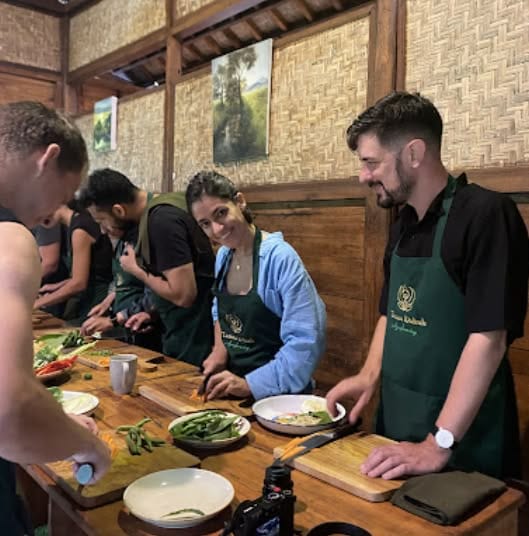
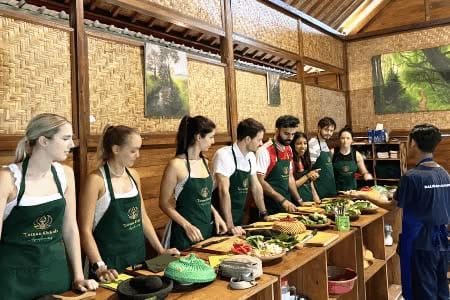
For travelers, learning to make bumbu Bali is often a revelation. What begins as a cooking class quickly becomes something else — a meditation on patience, gratitude, and respect for the ingredients. At places like Taman Dukuh, guests are invited to roll up their sleeves, crush spices the old way, and feel the energy of the island through scent and touch. As the paste takes shape beneath their hands, they begin to sense what every Balinese cook already knows: that food is alive. It listens. It responds. And when treated with care, it nourishes more than the body — it nourishes the spirit.
It’s easy to romanticize this, of course. But there’s nothing idealized about the sweat that goes into making bumbu Bali. It’s real, physical work. The pounding requires rhythm and strength. Yet perhaps that’s the point. In that repetition — that steady beat of effort — lies a reminder that good things take time. That harmony, whether in food or life, is something you create with your own hands.
In the end, bumbu Bali is not just the foundation of Balinese cooking. It’s a metaphor for the island itself — a blend of many elements, diverse yet unified, fiery yet balanced, ancient yet ever-changing. To taste it is to taste Bali’s story: rich, soulful, and endlessly alive.
And when that first bite of a vegan Balinese dish touches your tongue — the warmth of turmeric, the brightness of lemongrass, the whisper of palm sugar at the edge — you understand something profound. This is not just spice. It’s memory. It’s history. It’s home.
Plant-Based Staples: Bali’s Vegan Pantry
Wander through a traditional market, and you’ll see why Bali is a vegan paradise. Bright-green snake beans, piles of jackfruit, fresh coconut cream, banana blossoms, and leafy greens known as kangkung fill woven baskets. Fermented soy products like tempeh and tofu are everywhere — protein-packed and affordable.
Tempeh, especially, is a star ingredient. Originating in Indonesia, it’s made from fermented soybeans that develop a nutty flavor and firm texture. In Bali, you’ll find it grilled with sweet soy sauce, tossed into salads, or simmered in coconut milk curries.
Another hero is young jackfruit, known locally as nangka muda. When cooked slowly with spices, it transforms into a tender, flavorful filling that mimics shredded meat — perfect for tacos, curries, or traditional lawar without pork or chicken.
Traditional Vegan Dishes You Shouldn’t Miss
While Bali’s culinary landscape has embraced global trends, many of its authentic dishes are already vegan or can be made so easily.
- Lawar Tanpa Daging: Traditionally made with meat, lawar can be just as flavorful using green beans, grated coconut, and jackfruit cooked in spices.
- Sayur Urap: A colorful mix of blanched vegetables tossed with spiced grated coconut. It’s light, aromatic, and packed with texture.
- Jukut Ares: A banana-stem soup with subtle flavors of lemongrass and galangal — soothing and nutritious.
- Bubur Injin: Black rice pudding sweetened with palm sugar and coconut milk, a beloved dessert that’s naturally vegan.
- Nasi Campur Vegan: A rice platter with small portions of plant-based sides — think sautéed tempeh, sambal matah, stir-fried greens, and tofu skewers.
Each dish tells a story — of soil, ceremony, and community. Eating vegan in Bali isn’t about substitution; it’s about rediscovering authenticity.
From the Temple to the Table
In Bali, food and spirituality are intertwined. Many ceremonial offerings are plant-based, symbolizing purity and respect for life. During temple festivals, villagers prepare large quantities of vegan-friendly snacks like jaje uli (sticky rice cakes) and klepon (sweet rice balls filled with palm sugar).
Meals after rituals often feature shared platters of vegetables, fruits, and rice — reinforcing the sense of togetherness that defines Balinese culture. For travelers interested in mindful eating, participating in a temple meal or cooking session offers a glimpse into a way of life where compassion and cuisine naturally coexist.
Modern Vegan Bali: Where Tradition Meets Conscious Living
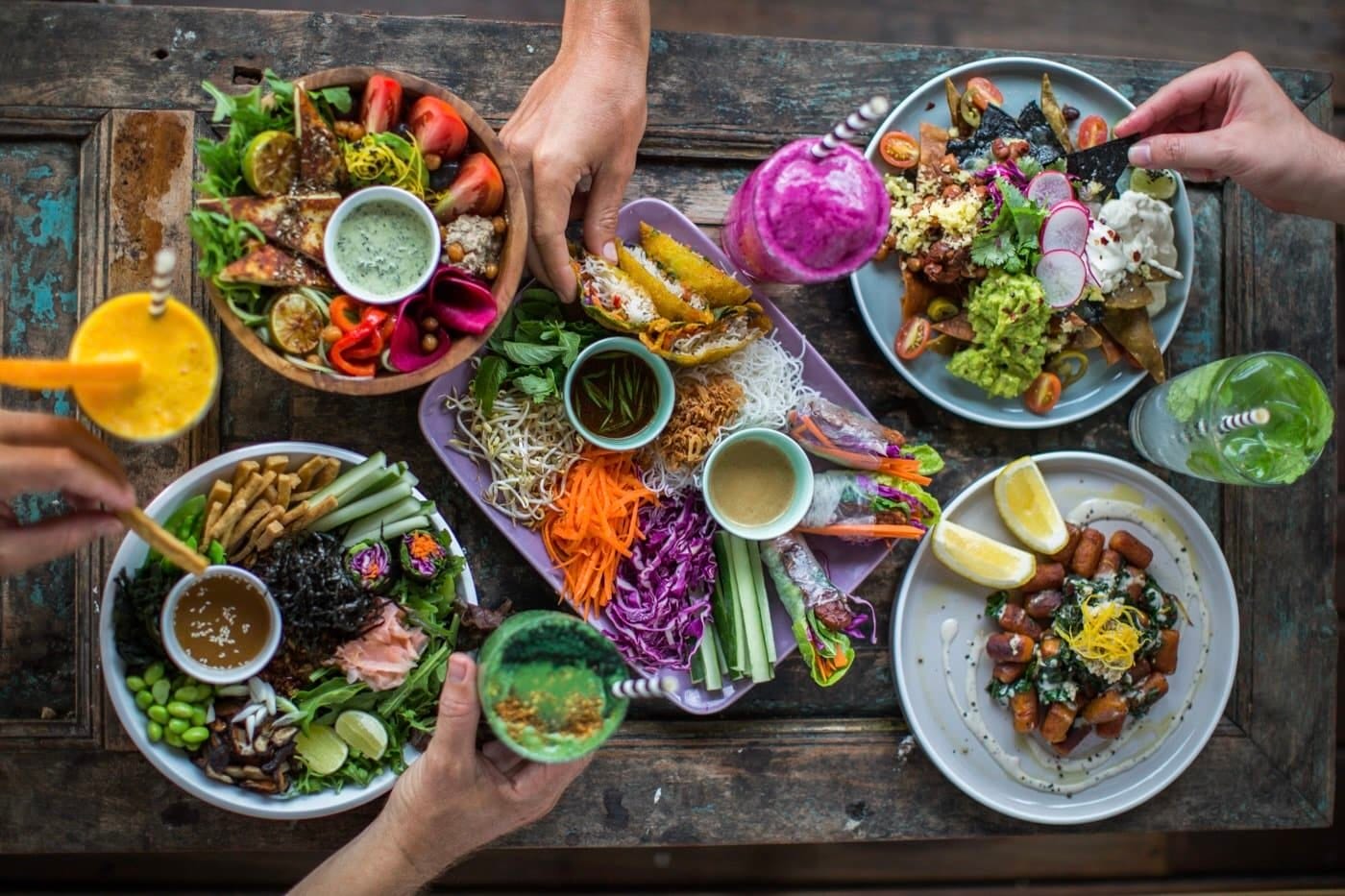
Today, Bali has become one of the world’s top destinations for vegan travelers. From beachside smoothie bars in Canggu to serene jungle cafés in Ubud, the island celebrates plant-based dining with creativity and heart.
Modern chefs are blending old wisdom with new innovation — crafting raw desserts with local cacao, vegan satay lilit made from tempeh and mushrooms, and smoothie bowls adorned with tropical fruits. Many restaurants partner with local farmers, ensuring fresh organic produce while supporting the community.
But beyond the restaurants and Instagram-worthy plates lies something deeper: a sense that veganism in Bali isn’t just a trend. It’s an evolution of values that have existed here for centuries — respect for nature, gratitude for food, and harmony with life.
Taman Dukuh: A Home for Mindful Travelers
Amid Bali’s green terraces and quiet villages, Taman Dukuh has become a gentle hub for travelers seeking to reconnect — with nature, culture, and themselves. Here, food isn’t just served; it’s shared as an experience.
Meals are prepared with locally grown ingredients, often harvested from nearby gardens. Guests can join cooking sessions to learn the art of bumbu Bali, explore the philosophy of Tri Hita Karana, or simply enjoy a slow lunch overlooking the rice fields.
At Taman Dukuh, vegan Bali food feels like a dialogue between land and soul. Every bite reflects the balance that defines Balinese living — nourishing, sustainable, and deeply rooted in gratitude.
Experiencing Vegan Bali: Where to Eat and Learn
For travelers curious to explore vegan Bali beyond Taman Dukuh, the island offers countless experiences.
- Ubud: Known as the heart of Bali’s wellness scene, Ubud brims with vegan cafés and yoga retreats. Don’t miss Alchemy, Zest, or Sayuri Healing Food.
- Canggu: Perfect for beach lovers seeking a mix of surf and smoothie bowls. Try The Shady Shack or Give Café, which donates profits to local causes.
- Sidemen and Amed: Ideal for those wanting quieter corners of Bali, where local families still cook traditional plant-based meals.
- Cooking Classes: Many villages now offer vegan Bali cooking workshops that teach guests how to make lawar tanpa daging, sayur urap, or bubur injin using garden-fresh produce.
These experiences allow visitors not only to taste but to understand the island’s deep relationship with plants and people.

Sustainability and the Future of Vegan Bali
As Bali welcomes more conscious travelers, sustainability has become a guiding force in its food culture. Many vegan Bali restaurants use zero-waste principles, avoid single-use plastics, and compost organic waste. Farmers’ markets promote seasonal produce, while community programs encourage young locals to rediscover traditional crops like cassava and moringa.
This movement aligns beautifully with Balinese values. The island’s future of veganism isn’t about importing trends from the West but about honoring what has always been here — simplicity, gratitude, and respect for the natural world.
The Heart of Vegan Bali
To eat vegan in Bali is to participate in something much larger than a dietary choice. It’s a gentle act of connection — with the island’s soil, with its people, and with its spirit.
Every spoonful of coconut curry, every bite of grilled tempeh, carries a quiet reminder: that food has the power to heal, to unite, and to tell stories. In Bali, those stories are ancient yet ever alive — flowing through the hands that prepare the meal, the earth that nurtures the plants, and the hearts that share them.
For the mindful traveler, this is the true taste of the island — simple, soulful, and deeply human.