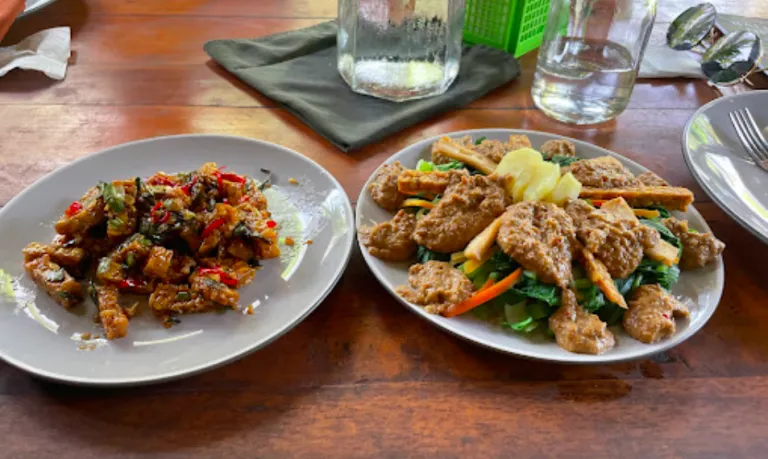
Cooking class Bali isn’t just something you join — it’s something you feel. Picture this: the morning sun spilling across the rice fields, the air alive with the scent of lemongrass and wood smoke, and the soft rhythm of pestle against stone as you learn the ancient art of Balinese cooking. At Taman Dukuh, it’s not a typical class with recipes on a clipboard. It’s a journey that pulls you into the island’s heartbeat — where every spice tells a story, every flavor carries history, and every moment in the kitchen feels alive.
You start as a curious traveler, apron tied a bit awkwardly, but somewhere between the laughter, the chopping, and the dance of sizzling oil, something shifts. The island begins to speak through your hands. You grind your own bumbu Bali, wrap fragrant meats in banana leaves, and slowly, almost without noticing, you transform — from guest to cook, from observer to creator. That’s the beauty of the Taman Dukuh cooking class Bali experience.
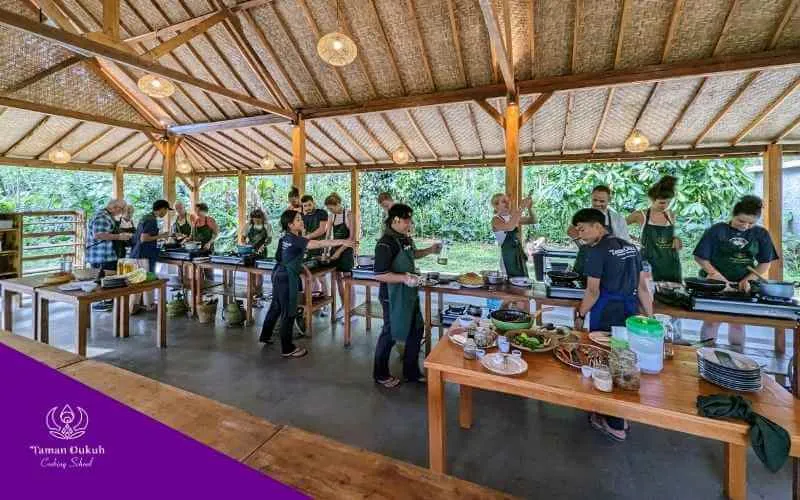
It doesn’t just teach you how to cook; it teaches you how to belong. And when you finally sit to taste the meal you’ve made, surrounded by the hum of the countryside and the warmth of new friends, you’ll realize this wasn’t just a lesson in food — it was a love letter to Bali itself. So go ahead, book your spot, roll up your sleeves, and let the island show you what it means to cook with heart, with soul, and with joy.
The island breathes through its food. The scent of bumbu Bali — that complex paste of turmeric, ginger, galangal, garlic, and chilies — floats through the air like a hymn. It mingles with the perfume of frangipani, the salt of the sea, and the earthy sweetness of rain-soaked soil. In Bali, cooking isn’t just a routine; it’s a rhythm of life, a daily ritual that bridges the seen and unseen worlds.
Every dish here carries a lineage. Recipes are not written on paper but whispered from mother to daughter, measured not in spoons but in intuition. The elders don’t teach you how long to roast the coconut or how much salt to sprinkle — they tell you to listen to the sound, to trust your nose, to feel when the flavor is ready. That’s the essence of Balinese cooking: instinct, patience, and reverence.
And it’s this reverence that travelers often discover when they join a cooking class in Bali. They come expecting a lesson in recipes; what they find instead is a doorway into the island’s soul.
In villages like those surrounding Taman Dukuh, the experience begins at dawn. The world is still quiet except for the soft rustle of banana leaves and the distant crowing of roosters. Guests follow a local guide through winding paths lined with coconut palms until they reach the morning market — a riot of color and sound that stirs every sense awake.
Here, learning begins long before the first ingredient hits the pan. It starts with conversation, laughter, and curiosity. Vendors greet each other like family. An old woman in a patterned kebaya slices turmeric with hands stained gold from years of work. The air is thick with the scent of lemongrass and chilies, and somewhere nearby, someone is grinding spices with the steady rhythm of a pestle.
In this moment, travelers realize that the market isn’t just where ingredients are bought — it’s where culture breathes. Each vegetable has a story, each spice a role in ceremony. Even the way people negotiate prices carries the warmth of community.
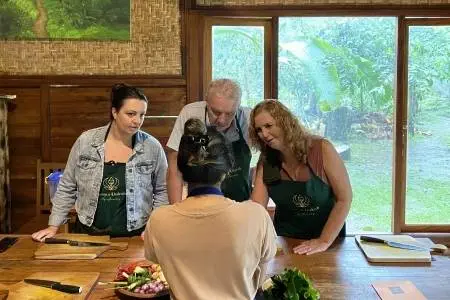
Later, back in the open-air kitchen at Taman Dukuh, the real magic begins. The cooking class unfolds not in a rush of measurements and timers but in the slow, deliberate art of understanding. A Balinese instructor, often a village mother or grandmother, begins by laying out the ingredients like treasures: red chilies, shallots, lemongrass, kaffir lime leaves, and fresh coconut. Her hands move with practiced grace, her smile gentle but knowing.
She doesn’t lecture; she invites.
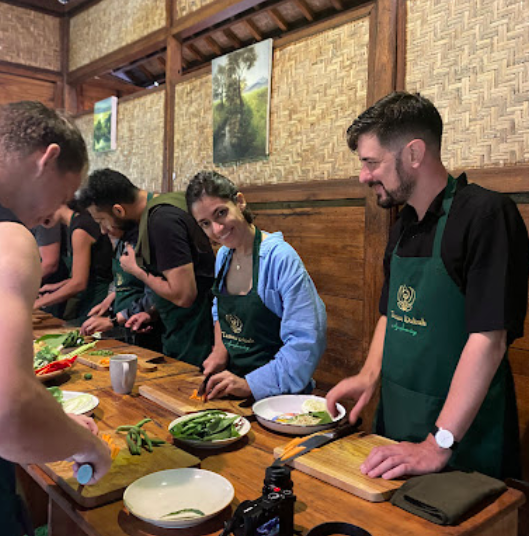
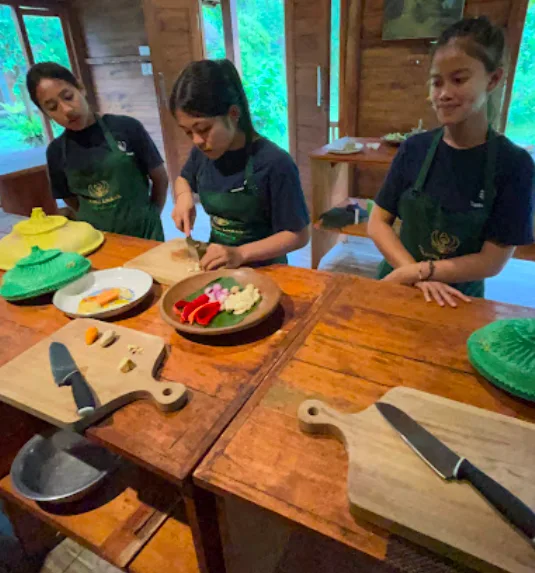
The participants gather around, sleeves rolled up, laughter bubbling as they fumble with knives and mortars. The instructor shows how to bruise lemongrass so the aroma blooms, how to peel turmeric without staining your fingers too much, and how to balance heat with sweetness. She reminds them to respect the ingredients — to handle them not as commodities, but as gifts from the land.
When they begin pounding spices together, the rhythm of the stone mortar fills the air — thud, thud, thud — a sound as old as the island itself. The paste changes color as it’s ground, releasing waves of fragrance that cling to the skin and clothes. For a moment, the kitchen falls silent, each person absorbed in the simple, grounding act of creation.
Cooking class Bali is a sensory experience, but it’s also a spiritual one. Before the meal is served, a small portion is always offered to the gods — a gesture of gratitude that honors the balance between human effort and divine blessing. It’s in this quiet moment of offering that visitors often feel something shift within them. They begin to see food not just as sustenance, but as a thread that ties together family, faith, and nature.
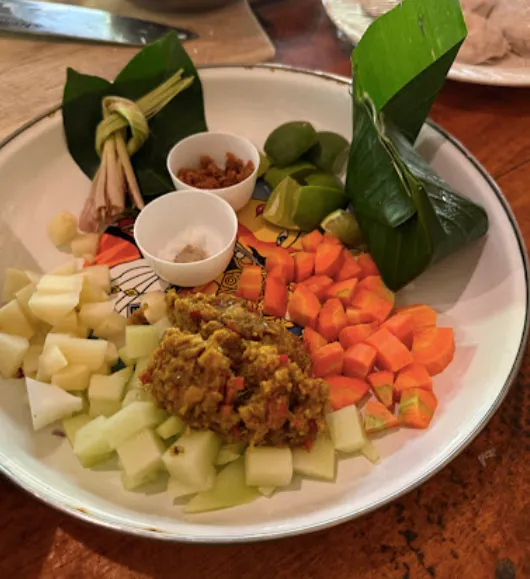
As the dishes take shape, the table transforms into a mosaic of color: golden ayam betutu, smoky sate lilit wrapped around lemongrass stalks, crisp tempeh manis glazed with palm sugar, and fresh salads bursting with lime and chili. Every bite tells a story — of soil, sea, and spirit.
And when everyone finally sits down to eat, something beautiful happens. Strangers become friends. The conversation flows as freely as the coconut water. The shared meal turns into a celebration, not just of taste, but of belonging.
For many, this moment is the highlight of their time in Bali. It’s not about fancy restaurants or Instagram-worthy plates. It’s about connection — to the people, to the land, to the act of creation itself. That’s what a cooking class Bali truly offers: not just a skill, but an awakening.
Those who’ve experienced it often describe it as transformative. They return home with more than recipes scribbled in notebooks. They carry memories of warm laughter echoing through open kitchens, of market vendors pressing fragrant leaves into their hands, of the way the island seemed to breathe through the food they made.
And long after the trip ends, they find themselves recreating those dishes — pounding spices in their own kitchens, inhaling the scent of lemongrass, and remembering the peace they felt in Bali. They realize that the island never really leaves them.
For Taman Dukuh, offering these cooking class Bali isn’t about tourism; it’s about preservation. Each guest who learns to make bumbu Bali becomes a storyteller, carrying the tradition forward in their own way. The kitchen becomes a bridge — between cultures, between generations, between hearts.
Outside, the rice fields sway in the afternoon light, mirroring the rhythm of life that moves so effortlessly here. The cooking fire crackles softly, smoke curling upward like a prayer. Somewhere in the distance, a temple bell rings.
Bali continues to hum — quietly, eternally — to the rhythm of its food.
And for those lucky enough to have rolled up their sleeves in a cooking class Bali, that rhythm stays with them. It lingers in their memory, in the spices that stain their hands, in the stories they tell long after they’ve left the island.
Because Bali doesn’t just feed you. It changes the way you see the world — one bite, one story, one shared meal at a time.
The Roots of Balinese Cuisine
To understand Balinese cooking, you have to step back in time. The island’s culinary identity is shaped by geography and culture. Surrounded by the sea and blessed with volcanic soil, Bali is fertile and abundant. Rice paddies stretch endlessly, coconuts hang heavy on trees, and aromatic herbs grow wild along the paths.
Centuries ago, Balinese people developed a way of life based on Tri Hita Karana — the philosophy of harmony between humans, nature, and the divine. This belief seeps into every part of daily living, including what ends up on the plate. Meals aren’t just about satisfying hunger; they’re offerings to the gods and expressions of gratitude.
Bali’s history also brought influences from across the archipelago and beyond. Trade with Java, Sumatra, and India introduced new spices and cooking methods. Yet, despite the exchanges, Balinese cuisine has stayed true to its roots — earthy, aromatic, and intensely flavorful.
The Soul of the Kitchen: Bumbu Bali
If there’s one secret that binds all Balinese dishes together, it’s bumbu Bali, the traditional spice paste that’s considered the soul of the kitchen.
Every home has its own version, passed down from mothers to daughters, fine-tuned over decades. The base is usually a mix of shallots, garlic, turmeric, ginger, galangal, candlenuts, chili, and shrimp paste — all pounded together in a mortar until they become a fragrant golden paste.
This paste is what gives Balinese dishes their unmistakable depth. It’s not spicy in the way some expect; rather, it’s layered — smoky, floral, earthy, and warm all at once.
At Taman Dukuh, guests sometimes join locals in grinding these spices by hand using a cobek, a traditional stone mortar. The rhythm of the pestle, the rising perfume of turmeric and lemongrass — it’s a kind of meditation, connecting you with the heartbeat of Balinese life.
Everyday Meals and Sacred Offerings
In Bali, food follows the rhythm of ceremony and the cycle of life. Some dishes are made only for rituals, while others are part of daily meals shared within families.
A typical Balinese meal is a mix of contrasts — spicy and sweet, crisp and tender, smoky and fresh. Steamed rice takes the center stage, surrounded by small portions of vegetables, sambals, grilled meats, and satays.
But what truly makes Balinese cuisine fascinating is its spiritual side. Many dishes begin as offerings before they’re eaten. Early in the morning, women prepare canang sari — small baskets of flowers, rice, and sometimes food, laid out on shrines to honor the gods. On festival days, entire families cook together from dawn, creating feasts meant for both humans and deities.
During Galungan and Kuningan, two of Bali’s biggest celebrations, the smell of roasted meat and coconut smoke fills the air. Men prepare lawar — a traditional mix of minced meat, grated coconut, and spices — while women shape rice cakes and fry snacks. Every movement, every stir of the pot, carries a purpose. Cooking becomes an act of devotion.
Iconic Dishes You’ll Fall in Love With
If you’ve spent any time in Bali, certain dishes will stay with you forever.
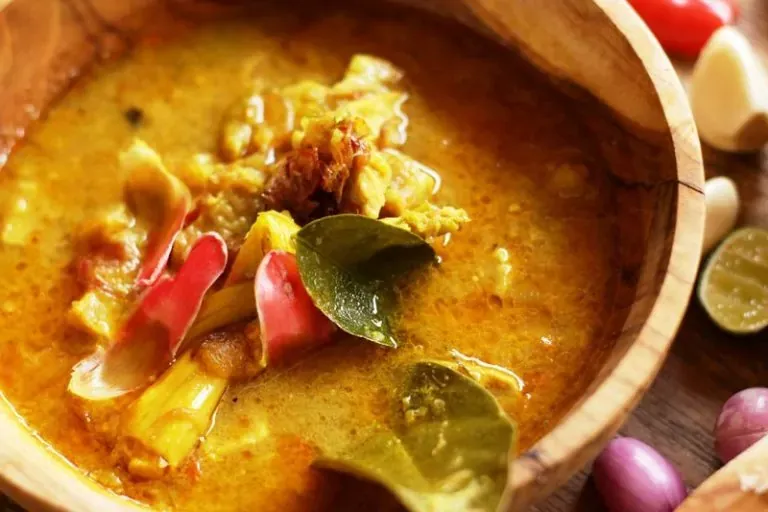
1. Ayam Betutu – This is Bali’s most famous dish, a whole chicken marinated in bumbu betutu and slow-cooked for hours until it’s infused with spice and smoke. Traditionally, it’s wrapped in banana leaves and roasted underground. The result is tender meat that falls apart with a gentle pull.
2. Lawar – A dish that’s both rustic and sophisticated. Minced meat (often pork or chicken) is mixed with grated coconut, rich herbs, and sometimes fresh pig’s blood for color and flavor. It’s a communal dish — men often gather to prepare it together during festivals.
3. Sate Lilit – Unlike other Indonesian satays, sate lilit is minced fish or meat mixed with grated coconut and spices, wrapped around bamboo sticks or lemongrass stalks, then grilled over charcoal. Its smoky aroma is irresistible.
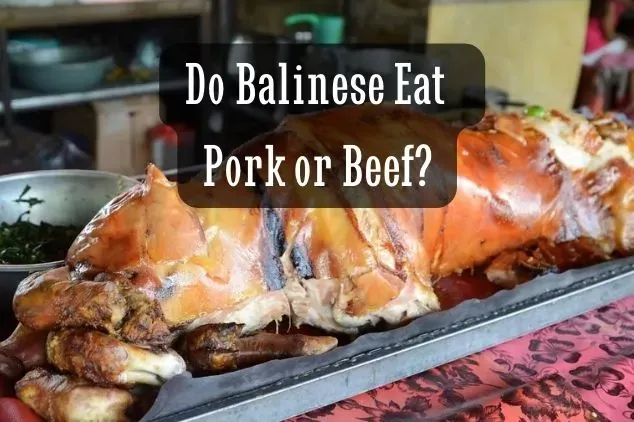
4. Babi Guling – The legendary Balinese suckling pig, usually served during special ceremonies. The skin is crisp, the meat juicy, and the stuffing — a blend of turmeric, garlic, shallots, and coriander — bursts with flavor.
5. Nasi Campur Bali – Think of it as a Balinese tasting platter: rice surrounded by small portions of meats, vegetables, sambal, and fried peanuts. It’s an explosion of texture and taste.
Each of these dishes is a story. And when you eat them where they were born — in the family kitchens, markets, or community feasts — you start to understand that Balinese cuisine is less about recipes and more about relationships.
Markets: The Beating Heart of Balinese Flavor
No exploration of Balinese cuisine is complete without visiting its traditional markets. Early in the morning, when roosters crow and the first light touches the temple roofs, markets like Ubud, Gianyar, or even the small local pasar near Taman Dukuh come alive.
Vendors call out prices, women in colorful sarongs bargain good-naturedly, and the air is thick with the scent of chili, coconut, and tropical fruit. You’ll find everything here — fresh turmeric roots still damp with soil, bundles of banana leaves, fragrant pandan, and handmade coconut oil.
It’s in these markets that you truly feel the pulse of Balinese cooking. Ingredients aren’t just bought — they’re selected with intuition and respect. A good cook knows how to feel for ripe fruit, how to judge a chicken’s age, how to sense when a spice blend is “just right.”
Visitors at Taman Dukuh often start their cooking experiences here, guided by locals who know every vendor by name. It’s not just a shopping trip; it’s a window into the island’s living tradition.
The Connection Between Food and Ritual
Every Balinese kitchen is a sacred space. The paon, or traditional kitchen, is usually separate from the main house and always has a small shrine dedicated to the goddess of food, Dewi Sri. Before any meal, a portion is offered to her first.
Certain foods hold symbolic meaning. Yellow rice represents prosperity, red rice symbolizes strength, and white rice purity. Even the way food is arranged carries significance — always balanced, never excessive.
During temple ceremonies, offerings can range from simple fruits to elaborate towers of cakes and meats called gebogan. These displays are not about indulgence but harmony — showing gratitude and celebrating abundance.
When you take part in such rituals, you realize that Balinese cuisine isn’t something you consume; it’s something you join.
Modern Bali: Where Tradition Meets Innovation
While the essence of Balinese cuisine remains rooted in tradition, modern Bali has become a melting pot of creativity. Local chefs are reinterpreting old recipes with a new vision — keeping the soul, but playing with presentation and global techniques.
In Ubud or Seminyak, you’ll find fine-dining restaurants that serve sate lilit on charcoal stones or betutu foam alongside rice crisps. But even in these reinvented dishes, the foundation stays the same — local ingredients, respect for balance, and connection to culture.
At Taman Dukuh, this fusion comes alive naturally. Meals are often prepared the traditional way, but with touches that reflect the evolving tastes of travelers — a lighter version of lawar, vegetarian takes on classic recipes, or herbal drinks made from ancient remedies. It’s a reminder that tradition doesn’t mean static; it means continuity.
The Ingredients that Define Bali
The more you explore Balinese food, the more you realize that it’s deeply tied to the land.
- Coconut: Used in nearly every form — grated, pressed, or burned for its oil.
- Rice: The staple, grown in breathtaking terraces that define the landscape.
- Banana Leaves: Used as wrappers, plates, and flavor enhancers.
- Aromatics: Lemongrass, kaffir lime, turmeric, galangal, shallots — all give dishes their fragrance.
- Chilies and Shrimp Paste: For the unmistakable heat and umami.
These ingredients are not just chosen for flavor. Each one connects the cook to the island’s ecology and rhythm. Cooking becomes a dialogue with the environment — using what’s fresh, seasonal, and abundant.
At Taman Dukuh, surrounded by gardens and rice fields, you can see where these ingredients begin. Picking herbs in the morning, feeling the earth under your feet — it changes the way you think about food entirely.
Learning Through Taste: Taman Dukuh Cooking Class Bali
There’s no better way to understand a culture than by cooking with it. Many travelers say that the highlight of their time in Bali isn’t lounging on beaches or visiting temples — it’s standing in a kitchen, chopping shallots, and grinding spices alongside locals.
Cooking class Bali at places like Taman Dukuh don’t just teach recipes. They invite you into a story — explaining why bumbu must be pounded, not blended, or why food must be offered before it’s eaten. You learn by doing, by touching, smelling, tasting.
And when the meal is finally ready, you share it as the Balinese do — family-style, with laughter, stories, and quiet gratitude.
The Philosophy of Balance
Perhaps the most beautiful part of Balinese cuisine is its philosophy. Every dish seeks harmony — not only between flavors, but between the human spirit and nature.
Sweet, sour, salty, bitter, and spicy must coexist. A meal isn’t meant to overwhelm but to comfort. In every bite, you taste the island’s balance — the play between fire and water, earth and air, human and divine.
That’s what makes Balinese food unforgettable. It’s not about perfection. It’s about connection.
A Living Heritage
As Bali evolves, so does its food. New cafes open, young chefs return home from abroad, and international visitors bring curiosity and fresh ideas. Yet, the foundation remains the same — a deep respect for the old ways.
Every time someone learns to make bumbu Bali, buys ingredients from a local market, or shares nasi campur at a family table, the island’s culinary heritage grows stronger.
And that’s the essence of topical authority in real life: depth, continuity, and connection. Just as a website becomes an expert by exploring every corner of a topic, Bali’s people become masters of flavor by living their tradition fully, every day.
At Taman Dukuh, you don’t just read about that heritage — you walk into it. You smell it in the smoke of the kitchen fire, taste it in the first spoon of spicy lawar, and feel it in the rhythm of life that moves with every meal.
Cooking Class Bali Final Thoughts
Balinese cuisine is more than just food. It’s a language — one that speaks through aroma, color, and ritual. Every grain of rice tells a story about harmony between humans and nature. Every leaf of banana used to wrap food carries a sense of purpose. And every drop of coconut oil glistening in the pan reminds you of the island’s connection to its roots.
To understand Balinese cooking is to understand Bali itself — a place where life moves gently with the rhythm of prayer, laughter, and the sizzle of garlic meeting oil. Here, cooking isn’t just about preparing a meal. It’s about preserving wisdom passed down for generations, about gratitude, and about community.
When you walk into Taman Dukuh, you feel that story unfolding around you. The air is warm and rich with the scent of turmeric and lemongrass. The sounds of the nearby rice fields hum softly, and somewhere, someone is pounding spices in a stone mortar. It’s not a performance — it’s real, everyday Bali.
This is where the Taman Dukuh Cooking Class begins.
What makes this experience different is that it’s not a class in the usual sense. There’s no rush, no rigid recipe sheet. Instead, you’re welcomed like family. You’ll tie on your apron, step into an open-air kitchen surrounded by coconut trees, and learn by doing — by touching, smelling, tasting.
Your instructor, often a local chef or home cook, doesn’t just teach; they share. They’ll tell you why each ingredient matters, where it comes from, and how it fits into Balinese philosophy. You might start the day picking fresh herbs from the garden, feeling the morning dew on your hands, or visiting the nearby market to choose your vegetables while learning the Balinese words for them.
Then the real magic begins. You’ll prepare dishes like sate lilit, lawar, and ayam betutu from scratch, grinding your own bumbu Bali the traditional way — not with a blender, but with a cobek stone mortar, the same tool families have used for centuries.
Somewhere between the rhythm of grinding spices and the laughter shared across the kitchen, something changes. You stop feeling like a visitor. You start feeling like you belong. The aroma rising from your pan isn’t just food — it’s connection.
And when you finally sit down to enjoy your meal, surrounded by friends and the sounds of the countryside, you realize something simple but profound: Bali has taught you how to cook, but more importantly, it has taught you how to feel.
That’s what makes the Taman Dukuh Cooking Class Bali unforgettable. It turns curious travelers into confident Balinese chefs — even just for a day. You leave not only with recipes and skills but with stories to share, memories to taste, and a deeper understanding of why Balinese food is loved around the world.
So if you’re ready to experience Bali beyond the beaches, take that next step. Book your Taman Dukuh Cooking Class Bali and discover what it truly means to cook with heart, spirit, and soul. Because here, in this quiet corner of Bali, food doesn’t just fill your stomach — it fills your life.